In this article

One of the first questions we are asked, and quite rightly, is "how much will it cost?" It is a fair thing to want to know. The trouble is that painter and decorator prices genuinely do vary, from job to job and region to region, and any tradesperson who gives you a firm figure over the phone without seeing the work is guessing. In our experience that guess is almost always wrong, usually in a way that suits them rather than you.
So instead of pretending there is a single magic number, this guide sets out how decorating is actually priced in Surrey, what pushes a quote up or down, and how to tell a fair price from a cheap one. Our aim is that by the end you can read any quote, ours included, and know exactly what you are paying for.
Day rates versus fixed-price quotes
There are two main ways decorators charge.
A day rate is what a painter charges for a full day of labour. Across Surrey and the surrounding commuter belt, an established, insured decorator's day rate typically sits somewhere in the region of £180 to £300 a day for one person, with specialist work at the upper end and two-person teams around £320 to £500. A "day" normally means seven to eight hours on site, and it is worth asking whether materials are included in the rate. Day rates tend to be used for smaller jobs, for work that is hard to measure up front, or where the exact scope is likely to change as the job goes on.
A fixed-price quote is a single agreed figure for the whole job, start to finish. Behind the scenes the sums are straightforward: we measure the wall and ceiling area in square metres, divide by what the paint will actually cover, roughly 12 to 14 square metres per litre per coat for a decent emulsion on smooth walls, multiply by the number of coats, then add the prep days, the woodwork and the sundries. This is by far the more common approach for a full room or a whole house, and the more comfortable one for most homeowners, because the price does not move if the job takes a day longer than expected. The risk of a slow day sits with us, not with you.
Neither approach is inherently better. A good decorator will usually suggest whichever is fairer for the job in front of them. What matters is that you know which one you are being quoted, and that a fixed price is genuinely fixed rather than an "estimate" that quietly grows.
What actually drives the cost
When we price a job, the size of the room is only the starting point. Two rooms of identical floor area can differ enormously in price; here is what moves the figure.
- Preparation. This is the big one. Filling, sanding, caulking, stripping old wallpaper, treating damp patches, making good cracked plaster: prep is where the time goes and where the quality of the finish is decided. Proper filling is a two-pass job, and caulk needs overnight to cure before it is painted over, or the emulsion crazes along it. A tired room that needs this level of making-good will cost more than a sound one that just needs freshening up, even if they are the same size.
- Condition of the surfaces. Sound, previously painted walls are quick: a wash down with sugar soap, a light key with 120 to 150-grit, and on we go. Flaking paint means scraping back to a firm edge and feathering in with 80-grit. Old distemper must be washed off entirely, and nicotine or water stains need a shellac-based stain block or they bleed straight through any number of emulsion coats. Damp and cracks, common in older Surrey properties built on London Clay that shifts with the seasons, need addressing before any paint goes on.
- Ceiling height and access. Standard 2.4-metre ceilings are straightforward from a step-up. Tall Victorian rooms at 3 metres plus, stairwells and double-height hallways need towers, staging or scaffolding, which is slower to work from and, for exterior work especially, adds real cost.
- Number of coats. A gentle refresh in a similar colour might need one careful coat. Covering a dark colour with a pale one usually takes three. Bare or new plaster needs a mist coat first, emulsion thinned with 10 to 30 per cent water so it soaks in and grips, followed by two full topcoats. We cover this in detail in our guide to how many coats of paint you actually need.
- The detailing. Cutting in around coving, ceiling roses, picture rails, panelled doors and spindles takes time and a steady 2-inch angled sash brush rather than a roller. A plain box room is far quicker than the same-sized room full of period features: a flush door can be glossed in twenty minutes, a six-panel Victorian door is closer to an hour a coat.
- Materials. Paint quality matters. A budget contract matt and a premium washable durable matt are worlds apart in coverage and scrubbability, and the difference shows on the invoice. Contract matt is fine for a mist coat or a rental refresh; in a busy hallway it will polish and mark within months, where a durable matt takes a wipe-down for years.
What your money buys: a typical room, step by step
The clearest way to understand a decorating price is to see where the hours go. For an average lived-in room, our painters work broadly to this sequence.
- Clear and protect. Furniture to the centre, cotton dust sheets down, sockets and switches loosened or masked.
- Wash down. Walls and woodwork cleaned with sugar soap and rinsed; paint will not bond to grease, and kitchens and hallways carry plenty of it.
- Strip and repair. Any failing paint scraped back to a sound edge, wallpaper stripped where needed, cracks raked out so the filler has something to hold.
- Fill and sand. First fill, dry, second skim fill, then sanding: 80-grit for knocking back heavy repairs, 120 for shaping filler flush, and 180 to 240 on woodwork between coats. On a tired room this stage alone can be a full day.
- Caulk and spot-prime. Decorator's caulk to every junction gap, left overnight to cure. Bare patches, filler and stains spot-primed so they do not flash through the finish.
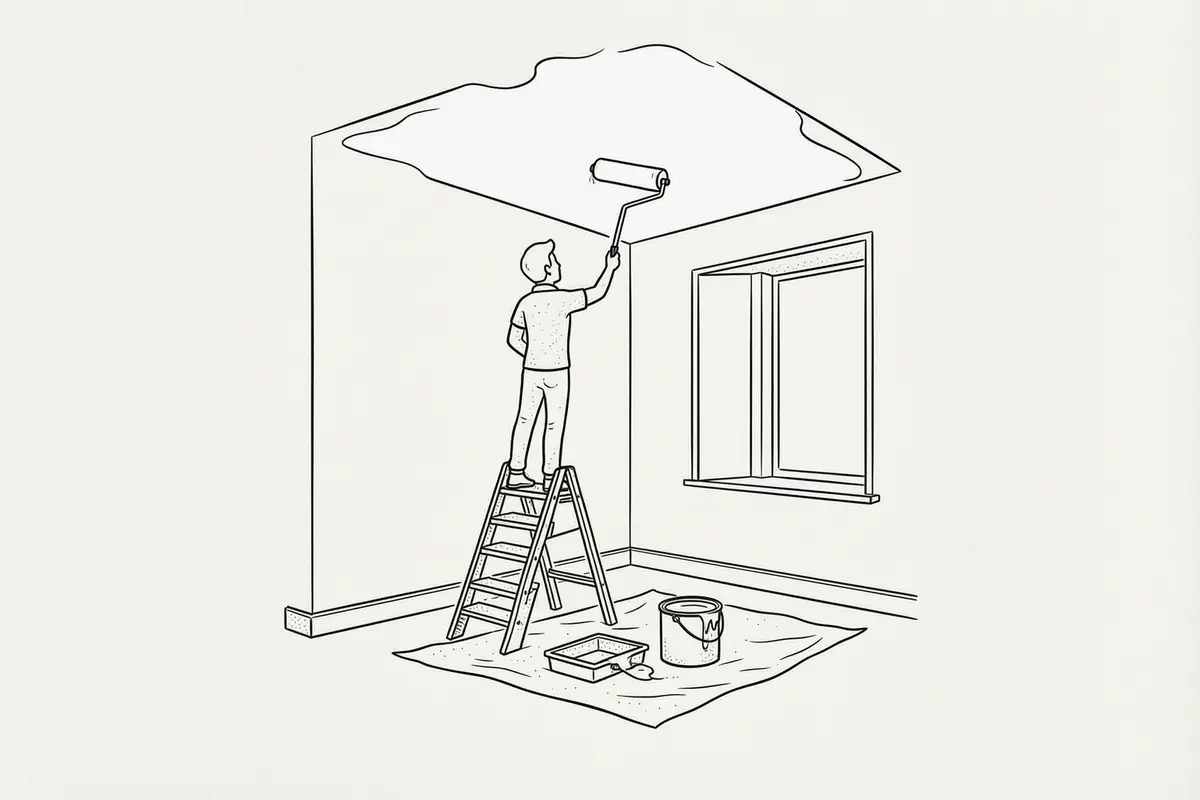
- Ceilings first. Two coats of matt, rolled with a medium 9 to 12-millimetre pile. Modern water-based emulsions are touch dry in an hour or two and recoatable in about four, so both coats usually go on in a day.
- Walls next. Cut in with the brush, roll the field, keep a wet edge, repeat. Two full coats as standard, three when going over a strong colour.
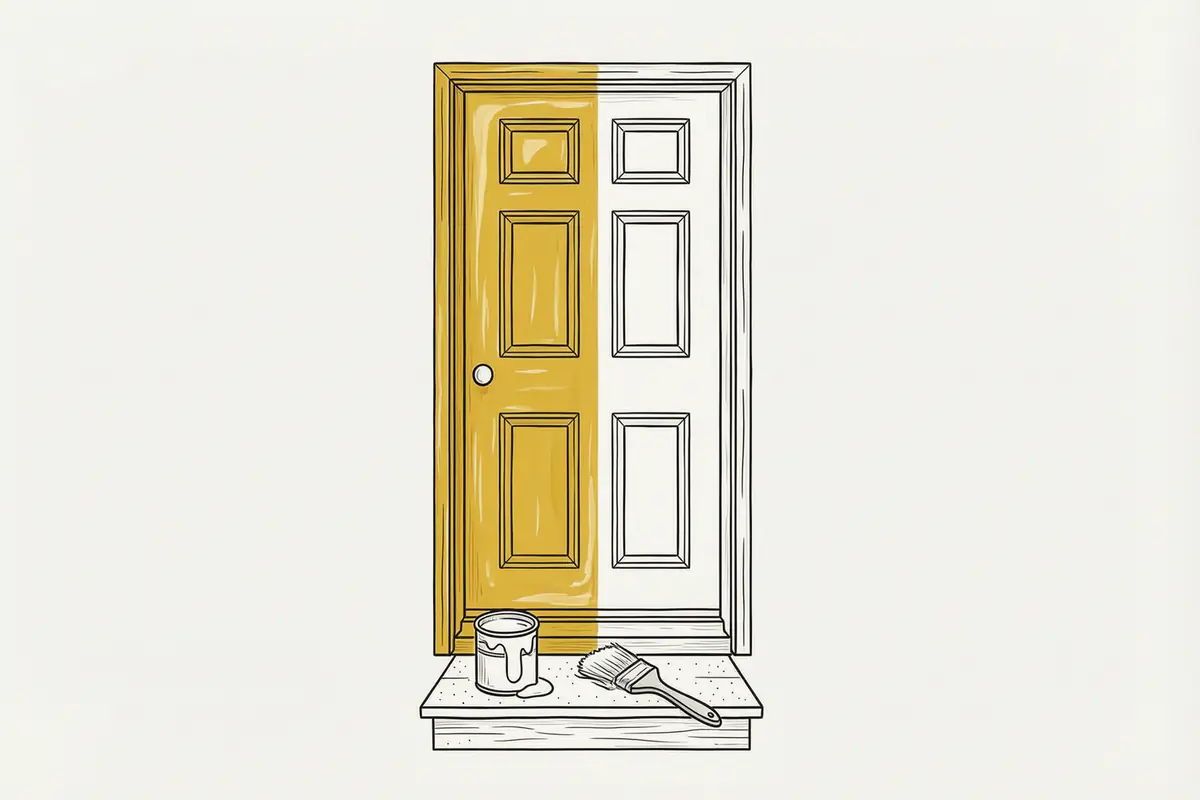
- Woodwork last. Skirting, architrave, doors and windows in satinwood or gloss with a short 4 to 6-millimetre pile roller or brush. Water-based finishes recoat in around six hours; traditional oil-based gloss needs 16 to 24, which is why an oil-glossed room always adds a day.
- Snag and hand back. A final walk-round in good daylight, misses touched in, sheets up, furniture back, and the room handed over clean.
When a quote looks "dear", it is usually because it honestly includes steps two to five. When a quote looks cheap, it is usually because it quietly does not.
Room-by-room versus whole-house pricing
People often ask for a "price per room", and while it is a useful rough guide, it hides a lot. A small box bedroom in good condition is a different job to a large through-lounge with a feature wall and skirting to gloss.
As a very general steer, redecorating a single average room in the UK, including walls, ceiling and woodwork, tends to land somewhere between £400 and £800 once labour and materials are combined, with Surrey and the South East towards the upper half of that range, and larger reception rooms or anything needing significant prep going beyond it. A full-house redecoration is quoted as a package, and here the per-room cost usually comes down: we are already set up and dust-sheeted, one delivery covers the whole job, and drying time in one room is working time in the next, efficiencies that simply are not there for a one-room visit.
If you are weighing up a bigger project, our detailed breakdown of the cost to paint a house in Surrey walks through interior and exterior figures in far more depth than a single guide can.
Interior and exterior are priced differently
Interior work is relatively predictable: it is weather-independent, access is usually straightforward, and the main variables are prep and detailing. You can read more about how we approach it on our interior painters page.
Exterior work carries extra considerations that push pricing around. Access is often the biggest factor, since anything above the ground floor may need towers or scaffolding, and scaffold hire is a substantial line of its own. The weather sets the timetable: masonry paint should not go on below about 8 to 10 degrees, in direct hot sun, onto a damp wall, or with rain due within 24 hours, which in the British climate narrows the reliable season to roughly late spring through early autumn. The surfaces are hungrier too: rough render takes masonry paint at only 4 to 6 square metres per litre against 12-plus indoors, and fascias, soffits and timber windows usually need cutting out, filling and priming before they see a topcoat. Timber sashes are a discipline of their own, which is why we run a dedicated wooden window painting service. All of this means an exterior job of the same "size" as an interior one will usually cost more, and rightly so. Our exterior painter page explains how we plan around it.
Why the cheapest quote is rarely the best value
We understand the temptation to go with the lowest number. But we have re-done a lot of work that was chosen on price alone, and it almost always costs more in the end. Here is why a very low quote should give you pause.
- Prep gets skipped. The fastest way to cut a quote is to cut the preparation, which is exactly the part you cannot see once the paint is on, and exactly the part that determines whether the finish lasts two years or ten.
- Cheaper materials. A lower price often means a thin contract-grade paint that needs an extra coat to cover and still marks at the first scuff. You pay twice.
- Drying times get ignored. Squeezing a three-day job into two means recoating emulsion before it has had its four hours, glossing over caulk that has not cured, or painting filler that is still damp. Every one of those shows within weeks.
- No insurance or guarantee. A properly set-up decorator carries public liability insurance and stands behind their work. That protection has a cost, and its absence is one reason a quote can look suspiciously low.
- The number that moves. A cheap headline figure that becomes a series of "extras" once the job starts is not really cheap at all.
None of this means the most expensive quote is automatically the best either. What you are looking for is a fair price with the workings shown, from someone you can actually talk to. Value is the finish and its longevity divided by the cost, not simply the smallest cost.
The mistakes we get called in to put right
A fair share of our work is repairing decorating that was done cheaply or hastily the first time. The same handful of failures comes up again and again, each traceable to a corner cut on prep or patience.
- Peeling from gloss. New paint applied straight over old oil-based gloss without abrading it or using an adhesion primer. It looks fine for a month, then sheets off at the first knock, and the fix is stripping back and starting again.
- Flaking on new plaster. Full-strength emulsion applied to bare plaster with no mist coat. The paint sits on the surface instead of gripping in, and peels in ribbons, sometimes taking the skim with it.
- Patchy sheen and flashing. Filler painted over without spot-priming, or a second coat rushed on before the first had dried, leaving dull and glossy patches that show badly in low evening light.
- Cracked caulk lines. Emulsion brushed over caulk within an hour of it going in. The caulk keeps curing underneath and the paint film crazes along every skirting board in the house.
- Exterior work done out of season. Masonry or woodwork painted onto cold, damp surfaces in November. By spring it is blistering, and the whole elevation needs stripping.
None of these failures is exotic; all are avoidable with ordinary care, which is precisely what a realistic price is buying.
How to compare quotes properly
When you gather two or three quotes, put them side by side and look past the bottom line. A quote worth trusting will make clear:
- Exactly what is included, from filling and sanding to how many coats and which surfaces.
- The paint being used, by brand, product line and finish, not just "good quality paint".
- Whether the figure includes materials and VAT, or whether either is added on top.
- Whether it is a day rate or a fixed price, and what happens if the scope changes.
- That the decorator is insured, and whether any guarantee applies.
- A realistic timescale, so you are not left with a half-finished room.
If one quote is dramatically lower than the others, the honest question to ask is not "why are the others so dear?" but "what is this one leaving out?" Nine times out of ten the answer is the preparation.
How we quote at Surrey Painters
Our approach is deliberately simple. We come out and look at the actual work, because that is the only honest way to price it. We measure up, check the condition of every surface properly, and talk through what you want. We will point out anything we would recommend addressing, such as failing plaster or a stain that needs blocking, and then give you a clear written quote that sets out the scope, the named materials and the price. For most household jobs that is a fixed price, so you know where you stand.
We would rather have a straightforward conversation about your budget than surprise you later, and if phasing the work or prioritising certain rooms would help, we will happily suggest it. You can learn a little more about how we work on our about page, and if you would like the reassurance of a firm figure for a larger project, our painting contractor service is set up for exactly that.
Frequently asked questions
How much does a painter and decorator cost per day?
In Surrey and the South East, an established, insured painter and decorator typically charges £180 to £300 per day for one person, with two-person teams around £320 to £500. Rates run a little lower in other parts of the UK and higher in central London. Always confirm whether materials are included in the day rate and how many hours a "day" covers.
How much does it cost to paint a room in the UK?
Painting an average room in the UK, walls, ceiling and woodwork, typically costs £400 to £800 including labour and materials, with the South East towards the top of that range. A small bedroom in good condition comes in under that; a large lounge needing stripping, filling and three coats over a dark colour goes well beyond it. Preparation, not floor area, is what moves the price most.
Do decorators charge per room or per day?
Most decorators use both, choosing whichever suits the job. Clearly defined work is usually given as a fixed price for the complete job, worked out from measured areas and prep time. Day rates are used for small jobs, snagging lists, or work where the scope cannot be pinned down in advance. Always ask which basis your quote is on.
Why do decorating quotes vary so much?
Quotes vary because decorators make different assumptions about preparation, coats and materials. One firm may price full prep, caulking and three coats of a premium paint; another one coat of contract emulsion over whatever is there. Insurance, guarantees and VAT registration add legitimate cost too. If two quotes are far apart, compare what each includes line by line and be wary of the one that specifies least.
Does the customer supply the paint?
Usually the decorator supplies the paint, and it is normally the better arrangement. We buy at trade prices, know exactly how much each surface needs, and take responsibility for how the product performs. You are welcome to supply your own, particularly for a specific designer colour, but most decorators will not guarantee coverage or durability on paint they did not choose, and any extra coats needed become chargeable.
How far in advance should you book a decorator?
Two to six weeks ahead is typical for a good decorator on interior work, and one to two months for exterior jobs in the summer season, when the dry-weather window fills the diary fastest. January and February are usually the quietest months and the easiest to book. If your dates are flexible, say so; a straightforward room can sometimes slot between larger contracts at shorter notice.
Get a clear, no-pressure quote
The only way to know what your job will genuinely cost is to have it looked at properly, and that costs you nothing. If you would like an honest, itemised quote for painting or decorating anywhere in Surrey, get in touch for a free, no-pressure quote. We will measure up, explain exactly what drives the price, put the materials in writing, and let you decide in your own time. No hard sell, just a fair number and a finish we are proud to put our name to.