In this article
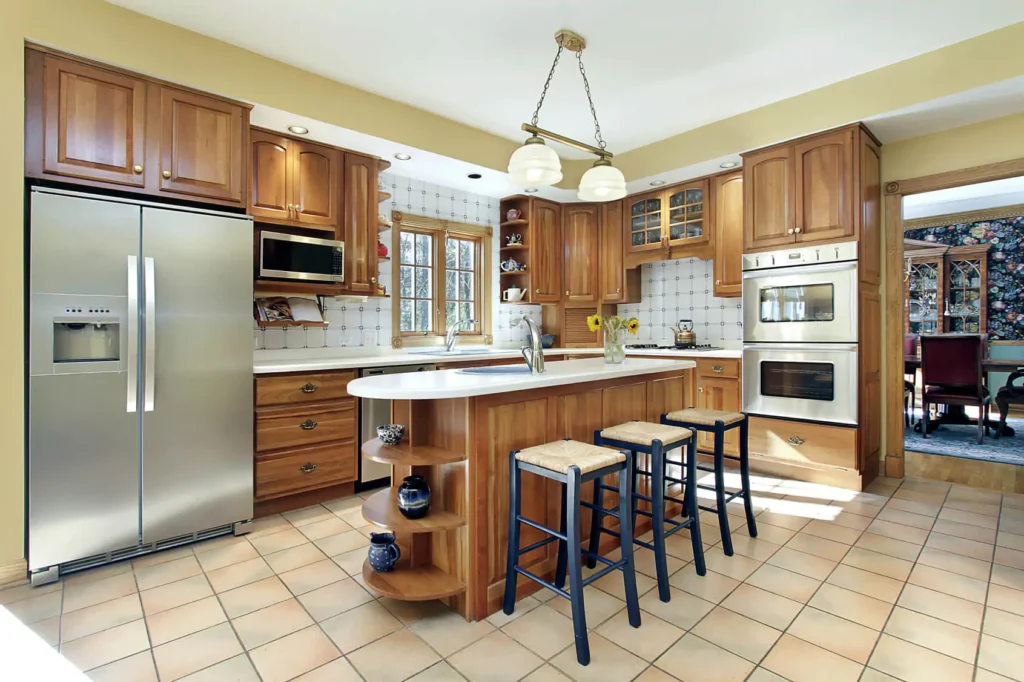
That honey-orange solid oak kitchen was the height of fashion in the late 1990s. Twenty-five years on it dates a room faster than almost anything else, yet the carcasses are usually rock solid and the doors are real timber. Ripping out a kitchen that still works is expensive and wasteful, which is why painting oak cabinets is now one of the most-requested jobs we get across Surrey kitchens.
Done properly, a repaint takes a tired farmhouse kitchen to a crisp off-white or deep sage shaker look for a fraction of the cost of replacement. Done badly, the finish chips on the door edges within weeks and the oak grain bleeds yellow through the topcoat. The difference is almost entirely in the preparation, and oak has two quirks that catch most DIY attempts out.
Why oak is harder to paint than it looks
Most oak kitchens are factory-finished with a tough, slightly glossy lacquer or varnish. Paint will not key to that slick surface on its own, so it has to be cleaned, de-glossed and primed before any colour goes near it.
Oak also has a deep, open grain and is high in natural tannins. Two problems follow from that:
- Tannin bleed. Moisture in water-based paint draws tannins to the surface, leaving yellow-brown patches that ghost through a pale colour. The only reliable cure is a stain-blocking primer, usually shellac-based.
- Open grain. Paint sits in the grain rather than filling it, so the texture still reads through the finish. If you want a dead-smooth, sprayed-furniture look the grain needs filling first; if you are happy to see a little timber character, you can skip that step.
Tools and materials
You do not need a workshop, but a few specific products do the heavy lifting:
- Sugar soap or a strong degreaser, and sandpaper (around 180 and 240 grit) for keying the lacquer
- A stain-blocking, shellac-based primer such as Zinsser B-I-N
- A hard-wearing topcoat: a water-based acrylic eggshell or a dedicated cabinet and furniture paint
- Wood filler and decorator's caulk for chips and gaps, plus fine grain filler if you want a fully smooth finish
- A good 50mm synthetic brush and a foam roller, or a sprayer for the best result; an electric screwdriver and low-tack tape
Step by step: painting oak cabinets
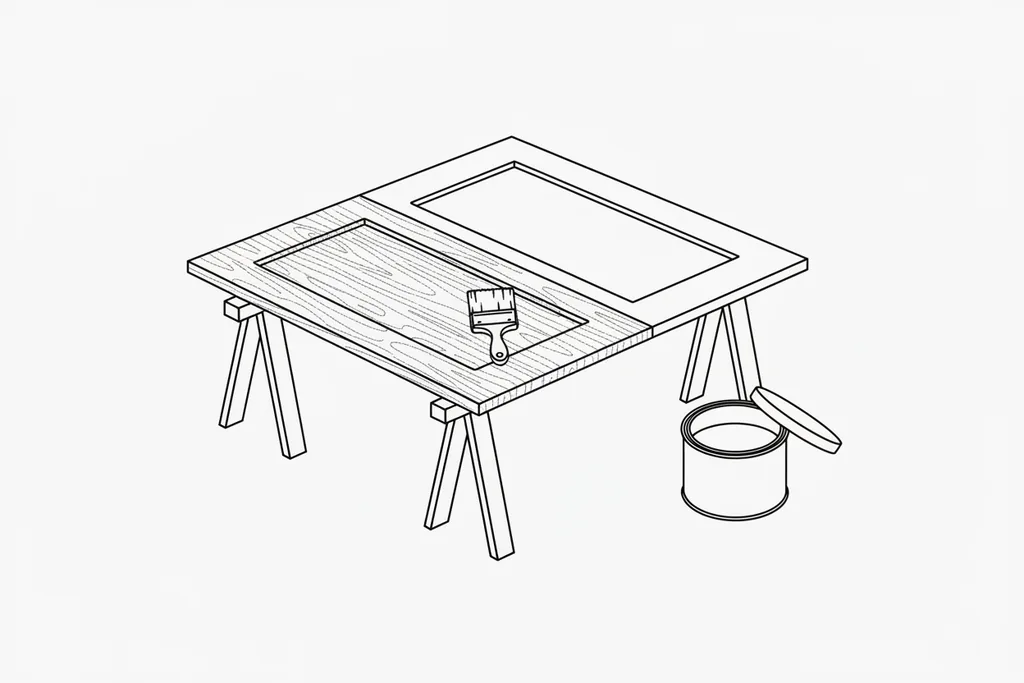
- Take the doors and drawers off. Label each one and bag its hinges and handles. Painting flat on trestles gives a far better finish than working on hung doors, and lets gravity work for you rather than against you.
- Degrease everything. Kitchen doors carry years of cooking grease, especially around handles and above the hob. Wash every surface with sugar soap, rinse and dry fully; skip this and nothing else will stick.
- Key the surface. Sand the lacquer back to a dull, matt sheen; you are not stripping it, just giving the primer something to grip. Wipe off all dust with a tack cloth.
- Fill if needed. Repair chips and dents, and work grain filler into the timber if you are after a smooth finish. Sand flat once dry.
- Prime with a stain blocker. One coat of shellac-based primer seals the tannins and gives the topcoat a sound base. Let it dry, then give it a very light sand.
- Apply two thin topcoats. Two thin coats always beat one thick one: they level better and resist drips. Sand lightly between coats and lay off in the direction of the grain.
- Cure before heavy use. Rehang the doors once each coat is touch-dry, but treat the finish gently for the first couple of weeks (more on that below).
Choosing the right paint and finish
Skip ordinary emulsion or standard gloss. Cabinet doors take constant handling, splashes and the odd knock, so you want a tough, washable, self-levelling finish. A water-based acrylic eggshell or a purpose-made cabinet paint is the usual choice: low odour, quick drying and far more scuff-resistant than a decorative wall paint.
On sheen, eggshell or satin is the sweet spot for kitchens. It wipes clean without the plasticky glare of full gloss, and it is forgiving of the small imperfections in older doors. Our guide to paint finishes for kitchens and bathrooms goes deeper on matching sheen to the room.
For colour, soft off-whites, warm greys, sage and inky blues are doing the heavy lifting in Surrey kitchens at the moment, often with the island picked out in a deeper shade. If you are weighing up tones, our roundup of neutral paint trends for Surrey homes is a useful starting point.
Brush, roller or spray?
You can get a respectable result with a quality brush and a foam roller, laying off carefully to keep marks down. But the flawless, factory-smooth look people picture when they imagine painted shaker doors comes from spraying, which lays the paint down in fine, even coats with no brush marks and a uniform sheen across a run of doors.
It is also a skilled, messy job that means masking off the kitchen and controlling overspray, which is why most homeowners hand the spraying over. If you want that finish without dismantling your kitchen, our spray painting service covers exactly this kind of work.
Drying versus curing
This is where good work gets ruined. Most cabinet paints are touch-dry within a few hours but take roughly two to three weeks to fully cure and reach their final hardness, and during that window the film is soft and easily marked.
So for the first fortnight, close doors gently, avoid stacking crockery hard against painted shelves, and do not scrub the surfaces. If a coat stays tacky for days rather than hours, the conditions or the product are usually to blame; our note on why paint sometimes does not dry properly covers the usual culprits, from cold rooms to a greasy surface.
Keeping a painted kitchen looking new
A painted oak kitchen is easy to live with if you treat it kindly:
- Wipe spills and splashes promptly with a damp cloth and mild soap; avoid abrasive scourers and harsh chemical sprays.
- Keep the kitchen ventilated when cooking, as steam and standing moisture are the enemy of any painted surface.
- Touch up small chips early, especially on door edges and around handles, before they spread.
- Keep a labelled offcut or a little leftover topcoat so future touch-ups match exactly.
When to call in a professional
Painting oak cabinets is within reach as a careful weekend project, but it is fiddly, dusty and unforgiving of shortcuts, and a kitchen is the one room where a poor finish shows every day. If you want a sprayed, hard-wearing result, or you simply do not have a fortnight of evenings to give it, it can be worth handing over.
Ben and Roman’s team handle oak and timber cabinet respraying across Surrey and South West London, from a single island to a full kitchen, and our furniture and cabinet painting service covers the prep, priming, spraying and reassembly. For a free, no-obligation quote, get in touch with us here or call 01483 694110.