In this article
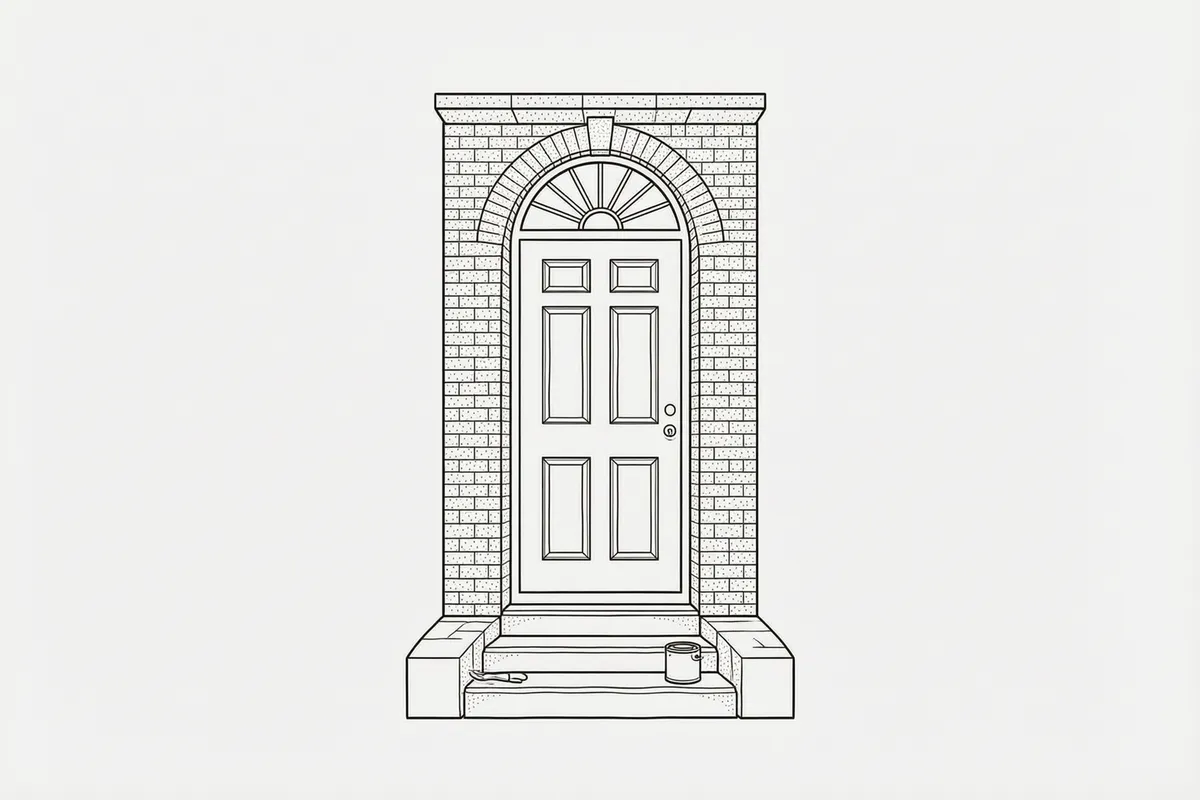
A front door is the smallest painted surface on most houses and the one that gets looked at hardest. In Guildford it is also, far more often than owners expect, the part of the house that planning controls reach. The borough has forty conservation areas, and on eight of them an Article 4 direction withdraws rights householders elsewhere assume they hold.
Here is what the council’s documents and the two appraisals that matter most say, and how we strip, knot and finish old softwood.
Where the extra controls apply in Guildford
The council’s Historic Environment Information document counts forty conservation areas, running from the Town Centre out through Charlotteville, Onslow Village and Waterden Road to Shere, East Clandon, Pirbright and Ripley. The council’s conservation page lists published character appraisals for thirteen of them.
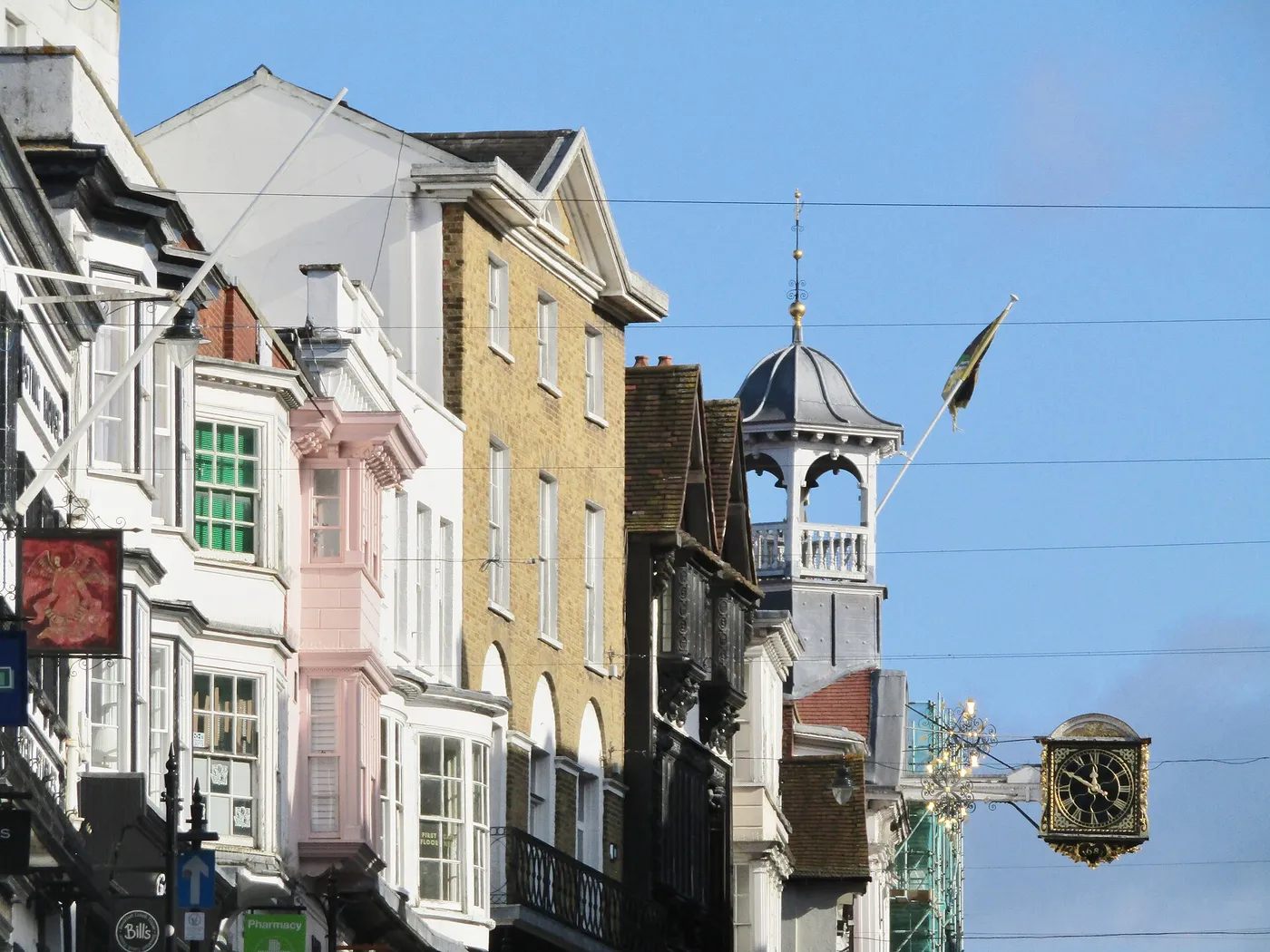
Photo: Guildford - High Street by Colin Smith, CC BY-SA 2.0 via Wikimedia Commons; resized.
That document names seven with a confirmed Article 4 direction: Waterden Road, Charlotteville and Warren Road, East Clandon, St Catherine’s, Shere, the Town Centre and Onslow Village. The council’s adopted Local Plan: Development Management Policies (PDF, 3.5 MB) of March 2023 puts the count at eight, and the Pirbright appraisal refers to directions on named groups of buildings there, so treat the council’s map, not any list, as the authority.
Even without a direction, a conservation area is not neutral ground. The council’s conservation-area page says permitted development rules do not always apply there. Where a direction is in force it adds, in the council’s own phrase, extra planning restrictions — most of them on the part of the property facing a road, a path or an open space.
When a colour change needs a check
The Historic Environment Information document lists the works those directions control where they front onto a highway or open space. Two entries matter here: the alteration, installation or replacement of doors and windows, and exterior painting of previously unpainted surfaces or changes of external colour schemes, which puts render and similar wall coatings in the same bracket. The council’s plainer web page puts it more broadly, listing painting or repainting the outside of the building among the works needing permission; the direction’s own wording is the narrower one, and it is the one that applies.
Painting a surface that has never been painted is therefore the case that always needs a check, and it is the least reversible thing you can do to old brick or stone. Changing the colour scheme on an elevation facing the road needs one too. Repainting an already painted door in the same colour does not: the Charlotteville appraisal’s own FAQ (PDF) treats that as maintenance. Outside the Article 4 areas, an unlisted house can be repainted in any colour without an application. Replacing a door is a separate control from painting it, and in an Article 4 area a replacement door on the road-facing elevation needs a planning application of its own.
A listed house has a second regime on top. You cannot alter a listed building without permission, and decisions must address sections 16, 66 and 72 of the Planning (Listed Buildings and Conservation Areas) Act 1990 — see our guide to painting listed buildings in Surrey.
The check takes minutes. Enter the address on the council’s About My Area map, open the My Maps tab and look at two filters: Planning, which shows conservation areas and listed buildings, and Land charges register information, which shows where Article 4 directions have been applied. Our wider piece on painting in Surrey conservation areas explains how the boroughs differ.
What the appraisals say about the doors
The Town Centre appraisal (PDF, 7 MB), adopted on 2 February 2006 and carrying the status of a material consideration, is unusually specific about joinery. Most of the doors date to the eighteenth or nineteenth centuries, it says, and are made from softwood and painted; the earlier ones were simple planks of hardwood, usually oak, left to weather rather than coated. Traditionally a door had four or six panels, the lower two sometimes raised and fielded to give it importance. Quarry Hill House in Quarry Street keeps a heavily decorated door the appraisal calls a nineteenth-century piece of whimsy.
The tall town houses of the High Street and Quarry Street are two or three windows wide, with parapet roofs, faced in brick or painted render, and carry the classical features of sash windows and panelled front doors. Across the conservation area the predominant window is the double timber vertically sliding sash, usually divided into six or eight panes. The appraisal records what has gone as well: many houses in Sandfield Terrace and Haydon Place no longer have their original windows and doors.
Charlotteville and Warren Road, street by street
Charlotteville and Warren Road was designated on 23 January 1990 and its appraisal adopted on 6 November 2003. Its Article 4(2) direction was made in October 2004 and confirmed without alteration in January 2005.
Building began in 1862 as a deliberately mixed development, villas alongside artisan dwellings. The appraisal’s schedule describes solid painted timber front doors, some half glazed, in recessed openings with generally no porches, behind painted timber vertical sliding sash windows that are single glazed. Red brick is noted with colour match flagged as important, alongside decorative yellow bricks, Bargate stone walling with red brick quoins and window surrounds, some painted render — especially on Cline Road — and natural grey slate.
The Sydney Road and Austen Road Triangle next door was laid out in 1853 and has belonged to the Waterden Road conservation area since 2004, which carries its own confirmed direction. There the doors are grander: panelled single or double leaf painted timber doors, fanlights, bay windows, and plain or decorative tile-hanging.
Choosing a colour that belongs to the street
Neither appraisal publishes a list of approved door colours, and we have not found one. What they give instead is the palette the street already works in. The Town Centre appraisal describes warm red clay brick and roofing tiles as the most prevalent colours, mixed with grey flint, browny-red Bargate stone, grey-white clunch and grey Welsh slate, with white or pastel painted render often contrasting against the red brick.
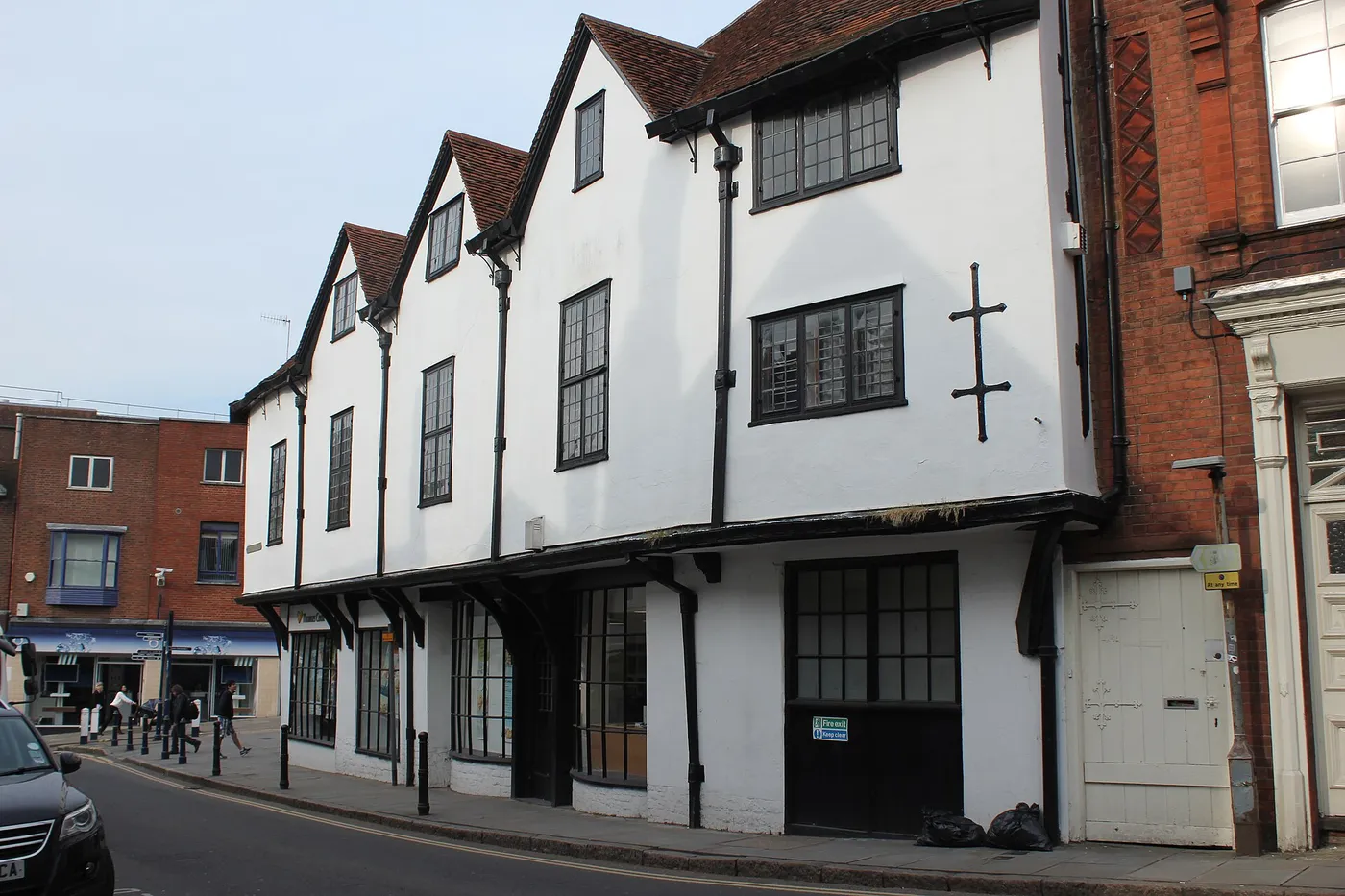
Photo: 46 High Street, Guildford (side) by Tim Sheerman-Chase, CC BY 2.0 via Wikimedia Commons; resized.
The technical data sheet for the solvent-based gloss system below advises that when painting resinous wood, or woodwork with a history of blistering, light colours are advisable, particularly on south-facing elevations.
Stripping back a failed finish
Old softwood that has been repainted several times fails in the same places: the bottom rail, the lower panel joints, and the edges where the door meets the frame. The manufacturer’s guidance on previously painted surfaces is to remove all loose and defective coatings, stripping back to bare wood if necessary, then rub down to get rid of grey, weathered wood and any sheen on the old coating, and dust off — it is the part of our exterior painting work that takes the longest and shows the least.
Two cautions before anyone reaches for a heat gun. If the existing coats could pre-date the 1960s, the same data sheet warns that old paint may contain harmful lead. The Health and Safety Executive’s guidance for that case is a chemical stripper or wet abrasion rather than dry sanding, never a blow lamp or gas torch, and no hot-air gun either — heat is what turns old lead paint into fume. If the finish has failed badly, take the door off and strip it flat on a bench, then rehang it to paint: wedge it open, keep the meeting edges thin so it closes at night, and expect the stiles to need more care. We paint the top and bottom edges too — the wettest surfaces on the door, and end grain drinks paint.
Knotting, priming and the coats that follow
On bare softwood the build is a system, not a single tin. The maker’s technical data sheet for a solvent-based exterior high gloss sets out a three-part system of primer, undercoat and gloss, preceded by knotting: one or two coats of knotting solution over any remaining knots first, then one coat of preservative primer on all bare wood, two coats of a flexible undercoat matched in colour to the topcoat, then one coat of gloss. Where a knot has already given trouble the advice is blunt — cut it out and put new timber in.
The figures on the tin set the timetable: touch dry in four to six hours, recoat in sixteen to twenty-four, and practical coverage of up to eighteen square metres per litre. Do not apply it below five degrees Celsius, which the sheet ties to British Standard BS 6150, and the surface must be sound, clean and dry.
Between coats we de-nib lightly and dust off. On a panelled door the brushing order matters as well: mouldings first, then the panels, the centre muntins, the rails, and the outer stiles last, keeping a wet edge throughout.
Solvent-based gloss or a water-based trim paint
The solvent system gives a deep, self-levelling sheen that still reads correctly on a nineteenth-century panelled door, and its film flexes with the timber. It costs a day or two in waiting, and it is solvent-borne, with a stated maximum of 300 grams per litre of volatile organic compounds. A water-based exterior trim paint gives that time back and, in our experience, holds its colour better in full sun, which is why we reach for it on the sunnier elevations. Our guide to the best paint for front doors compares products in more detail.
Frequently asked questions
Do I need planning permission to repaint my front door in Guildford?
Not for a same-colour repaint, and not at all outside the Article 4 areas on an unlisted house. In the eight areas with a confirmed Article 4 direction, changing the colour scheme on the side facing a road, path or open space, or painting a surface that was never painted, needs a planning application. A listed house needs listed building consent for a colour change wherever it is. Check the address on the About My Area map first.
Does it matter if I keep exactly the same colour?
No, for a like-for-like repaint. The council’s own Charlotteville appraisal answers this in its FAQ: repainting a previously painted surface is treated as maintenance and does not need permission. What the direction controls is a change of colour scheme on the side facing the road, or painting a surface that has never been painted. That FAQ is written for Charlotteville, so for the other Article 4 areas describe the job precisely and get the council’s answer in writing.
How do I find out whether my street has an Article 4 direction?
Open the council’s About My Area map, type in the address and go to the My Maps tab. The Planning filter shows conservation areas and listed buildings; the Land charges register information filter shows where Article 4 directions have been applied. If the result is ambiguous, the service desk on 01483 505050 gives informal advice.
What about a listed house — is the door different again?
Listed building consent is a separate regime from planning permission, and the council’s guidance is that you cannot alter a listed building without permission. Decisions must address sections 16, 66 and 72 of the Planning (Listed Buildings and Conservation Areas) Act 1990. A listed doorcase or fanlight is part of the listed fabric, so it needs consent like anything else.
How long does a proper front door job take?
Allow several days. On bare softwood the build is knotting over any remaining knots, one coat of preservative primer, two of undercoat and one of gloss, and the solvent-based system is touch dry in four to six hours but needs sixteen to twenty-four between coats. Add a day if the door has to come off for stripping.
Which colours suit a Victorian terrace in Charlotteville?
Start from what the appraisal says the street is made of: red brick with yellow bricks used decoratively, Bargate stone walling with red brick quoins and window surrounds, some painted render and natural grey slate. There is no published council palette, so we read the surrounding materials and choose against them. On a resinous or previously blistered door we lean lighter, particularly if it faces south, because that is what the manufacturer advises.