In this article
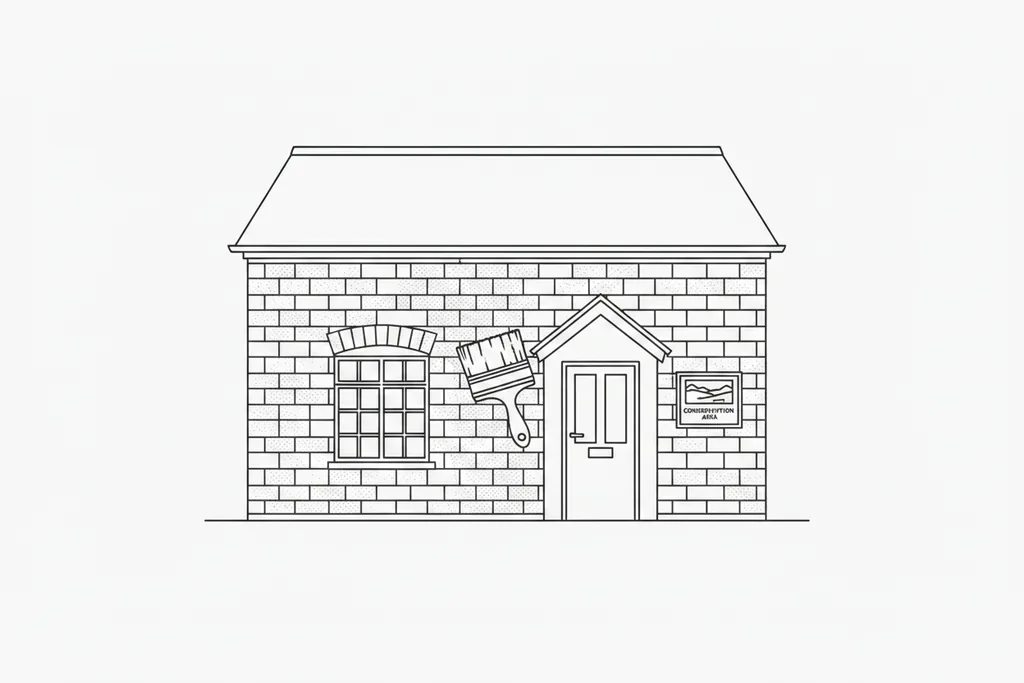
You buy a cottage on a leafy lane near Shere, decide the tired cream render would look smarter in a soft heritage grey, and pick up a brush one Saturday morning. In most of Surrey that's nobody's business but yours. In a conservation area with an Article 4 Direction, it can mean an enforcement notice and a bill to put it back.
Surrey has dozens of conservation areas covering historic centres in Guildford, Godalming, Dorking, Farnham and Weybridge, so the odds that an older Surrey home sits inside one are real. The rules are not there to stop you decorating; they exist to keep a street looking like itself. Knowing where the lines fall saves you time, money and an awkward letter from the planning department.
What a conservation area actually controls
Conservation areas are designated by the local council under the Planning (Listed Buildings and Conservation Areas) Act 1990. The designation protects the character and appearance of an area as a whole: its rooflines, materials, boundary walls, trees and the general grain of the place, rather than each individual house in the detail a listing does.
This is the point most homeowners get wrong. A conservation area is not the same as a listed building. If your property is also listed, far tighter rules apply and repainting historic joinery or previously bare surfaces can need Listed Building Consent in its own right. For an unlisted house, the question is narrower: has your normal permitted-development freedom to repaint been removed?
Do you need permission to repaint?
For a typical unlisted house in a conservation area, repainting an already-painted wall, window or door, even in a different colour, is usually permitted development and needs no application. The big exception is an Article 4 Direction. Several Surrey conservation areas carry one, and it strips out specific permitted-development rights so the council can keep control of how frontages look.
Where an Article 4 Direction is in force, work that would normally be automatic can need planning permission. Depending on the wording, that may include:
- Repainting a front elevation, or changing the colour of windows and doors that face a public road
- Painting brick, flint or stone that has never been painted before
- Replacing render or cladding, or altering its finish and colour
Two points are worth stating plainly. Painting previously bare masonry is a serious step in any older property, Article 4 or not, because it is hard to reverse and traps moisture in the wall. And the only reliable way to know which rights your address has lost is to ask the council, since Article 4 Directions are area-specific and sometimes street-specific.
Why bare brick and stone should usually stay bare
Most Surrey housing stock from before the 1920s has solid walls built to breathe. Coating them in standard vinyl emulsion or modern acrylic masonry paint seals that surface and pushes moisture back into the fabric, which over a few winters shows up as damp patches inside, blown plaster and spalling brick where the face flakes away in frost.
BS 7913, the British Standard for the conservation of historic buildings, steers owners towards like-for-like, vapour-permeable materials for exactly this reason. If a wall must be painted, breathable mineral or lime-based masonry paints and limewash let the structure dry out rather than trapping water. The same logic drives the breathable systems we recommend for timber windows in period homes, and it sits behind much of the advice in our guide to spotting and treating damp before you paint over it.
How borough rules differ across Surrey
Surrey is covered by several planning authorities, including Guildford, Waverley, Mole Valley and Elmbridge, and each manages its conservation areas slightly differently. The detail lives in two documents the council publishes:
- The conservation area appraisal, which describes the area's character, its key materials and the features that matter most.
- Any Article 4 Direction, which sets out precisely which permitted-development rights have been withdrawn and where.
Some appraisals comment on appropriate colours and finishes for prominent frontages and discourage strong, modern shades on traditional buildings. Rather than rely on a remembered rule of thumb, read the appraisal for your own conservation area, then ask the conservation officer about anything that isn't clear cut. A short conversation up front is far cheaper than redoing the work.
A sensible order of work
Treat the paperwork as part of the prep, in the same way you would treat preparing the surfaces themselves. The order that keeps people out of trouble:
- Confirm your status. Use the borough's online planning map or call the conservation team. Are you in a conservation area? Is the property also listed? Is there an Article 4 Direction on your street?
- Read the appraisal. Search for "[your borough] conservation area appraisal" and find the section covering your area. It tells you what the council is trying to protect.
- Choose compatible materials. On pre-1920s walls and joinery, favour breathable, vapour-permeable products over standard plastic emulsions and hard gloss.
- Ask before you commit. Many Surrey councils offer informal pre-application advice. Getting a colour or approach confirmed in writing is useful evidence if you ever sell.
- Keep a record. Hold on to original paint scrapings, manufacturer data sheets showing breathability, and any correspondence with the council.
If you've already painted and got it wrong
It happens, and councils generally prefer to resolve things by agreement rather than rush to enforcement. If you discover work needed permission you didn't have, contact the conservation officer early and be open about it. Likely routes are a voluntary repaint in a more sympathetic scheme, or a retrospective application where the breach is minor. The worst response is to ignore a query and hope it goes away.
Refresh with confidence
A conservation area is an asset, not a cage. Get the status checked and choose materials that suit the age of the building, and a repaint will lift both the look and the value of the house while keeping the street intact. As a Surrey decorating firm we handle heritage frontages across the county, from town-centre terraces in Godalming to render and timber on older homes, and we're happy to liaise with conservation officers on your behalf as part of our exterior painting work.
If you're weighing up a repaint in a protected area and want a clear, no-pressure steer, get in touch for a free quote and we'll talk it through.