In this article
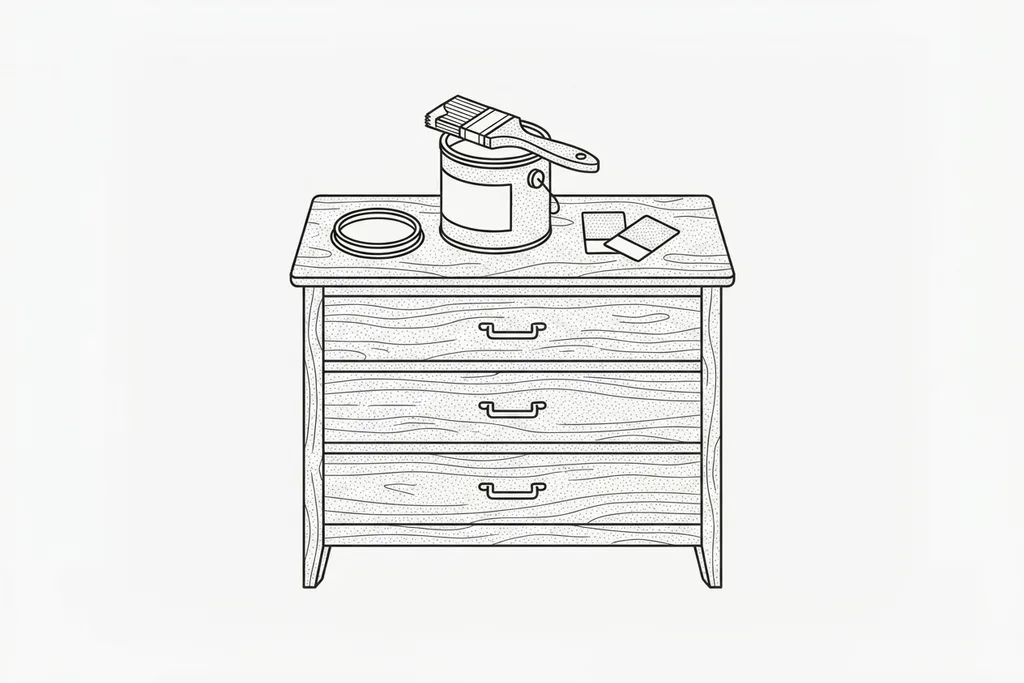
Few weekend projects change a room as cheaply as painting a tired chest of drawers, a dated pine table or a set of mismatched dining chairs. The trouble is that furniture paint is one of the most crowded shelves in the shop, and the wrong tin can leave you with a finish that chips, stays tacky for weeks, or peels off the first time a mug slides across it. Over the years our painters have upcycled everything from Victorian wardrobes to flat-pack cabinets across Surrey, so we know which products earn their place and which are all marketing. This is our honest, decorator's-eye guide to choosing the best furniture paint, followed by five tins we would happily reach for ourselves.
Some links in this article go to Amazon. As an Amazon Associate we earn from qualifying purchases — it costs you nothing and helps keep guides like this free.
Chalk, mineral or multi-surface: what actually differs
Almost every "furniture paint" on the shelf falls into one of a few families, and the label rarely spells out the difference. Chalk-style paints are water-based, dry to a soft matt finish and grip most surfaces with very little sanding — that low-prep convenience is exactly why they took over the upcycling world. They are quick, too: touch dry in 30 to 60 minutes, recoatable in two to four hours, and covering roughly 13 to 14 square metres per litre, so a 750 ml tin gives a typical chest of drawers two coats with some to spare. The trade-off is that a true chalk paint is porous and needs sealing with wax or lacquer to stand up to daily use.
Mineral paints are the newer, tougher cousins: they self-level beautifully, dry harder and often build in their own protective top coat, so you can skip the waxing step entirely. Then there are all-in-one and multi-surface acrylics, which behave more like a hard-wearing trade eggshell — slower between coats (four to six hours is typical) but noticeably tougher once cured. In our experience there is no single "best" — the right choice depends on the piece, how much it gets handled, and whether you want a chalky matt look or a wipeable satin.
One number the tin rarely shouts about is cure time. Water-based furniture paint feels dry within the hour but only reaches full hardness after two to three weeks; until then the film is soft enough to take the permanent imprint of a fruit bowl, so treat it gently for a fortnight.
- Chalk paint — easiest to use, most forgiving, best matt/vintage look; recoat in 2–4 hours, but needs sealing.
- Mineral paint — harder finish, often self-sealing, brilliant for tables and knock-about pieces.
- Multi-surface acrylic — the most durable, closest to a traditional trade eggshell; allow 4–6 hours between coats.
Do you actually need a primer?
This is the question we get asked most, and the honest answer is: it depends on the surface. On bare or previously chalk-painted timber, a good chalk or mineral paint will grip straight away with no primer at all — that is their whole appeal. The moment you move to something shiny, slippery or stain-prone, though, a primer stops being optional.
There are two jobs a primer does. The first is adhesion: on high-sheen varnish, gloss, melamine or laminate, a dedicated grip primer bonds to the slick surface and gives your colour coats something to hold on to. The second is stain-blocking: tannin-rich woods like oak and mahogany, old water marks, nicotine and pine knots can all bleed yellow-brown stains through pale paint, sometimes days later. A shellac-based or dedicated stain-blocking primer stops that, and because it seals the surface it usually saves a coat or two of colour, so it often pays for itself. Whichever you use, give it a full overnight dry before painting over it. If you are tackling a slick modern cabinet, our guide to painting MDF walks through the same primer logic for factory-smooth boards.
Prepping shiny, laminate and melamine surfaces
Paint fails at the join between the paint and whatever is underneath it, so prep is where most DIY furniture jobs are won or lost. For anything glossy or plastic-faced, the golden rule is to give the paint something to key into. We degrease first — a wipe-down with sugar soap or a little diluted detergent lifts years of furniture polish, kitchen grease and hand oils that would otherwise stop the paint bonding. Rinse with clean water afterwards and let the piece dry fully; sugar soap residue is itself a bond-breaker.
Next comes the abrasive, and the grit numbers matter: 120-grit where paint is flaking or the surface is damaged, 180–240-grit to key sound varnish, gloss or laminate (dull the shine evenly, do not cut through), and 320–400-grit saved for de-nibbing between coats later. Fill chips and dents with a two-part wood filler — it sets in 20 to 30 minutes and sands flush without shrinking back. Then vacuum and go over everything with a tack cloth. On laminate wardrobes and melamine kitchen units this step is non-negotiable; skip it and even the grippiest chalk paint can peel away in sheets. Not sure whether the old finish is oil-based? The quick test in our guide to painting over gloss takes thirty seconds. And if you are eyeing up your cabinets specifically, read our advice on painting an oak kitchen first, because kitchens face heat, steam and grease that ordinary furniture never does.
How we paint a piece of furniture, step by step
Here is the sequence our painters follow, whether it is one bedside table or a set of eight chairs. Budget a weekend: prep and first coats on day one, finishing on day two.
- Strip the hardware. Remove handles, hinges and catches, pull the drawers and label where everything goes. Painting around hardware always shows.
- Degrease. Sugar soap wash, clean-water rinse, then let it dry fully.
- Repair. Two-part wood filler in chips, dents and screw holes; sand flush with 180-grit once set.
- Key the surface. A light, even scuff with 240-grit, then vacuum and tack-cloth off every trace of dust.
- Prime where needed. Adhesion primer on laminate, melamine or old gloss; stain-blocker on oak, knots and water marks. One even coat, left overnight.
- First colour coat — thin. A 1.5–2 inch synthetic brush for frames, legs and mouldings; a 4-inch short-pile microfibre or foam roller for flat panels, laying off lightly with the brush tip while the paint is wet. Thin coats always beat thick ones.
- De-nib. Once dry, a whisper-light pass with 320–400-grit knocks off dust nibs and raised grain. Dust off again.
- Second coat. Same technique. Strong colour changes — dark wood to white, or white to navy — often want a third.
- Seal. Wax or lacquer depending on the piece (more on that below), unless your paint is self-sealing.
- Let it cure. Refit hardware after 24 hours and keep the piece on light duties for two to three weeks.
Sealing: wax versus lacquer
If you use a porous chalk paint, the top coat matters as much as the colour. Furniture wax is the traditional partner — applied sparingly with a lint-free cloth or a round wax brush and buffed after 30 to 60 minutes, it builds to a lovely soft sheen and is beautifully repairable. Two thin applications beat one heavy one, and give the paint 24 hours before waxing or it will drag. Wax is the least hard-wearing option, though, and needs refreshing every year or so, so we save it for low-touch pieces like display cabinets and bedroom furniture.
For anything that earns its keep — dining tables, coffee tables, kitchen chairs, bathroom cabinets — we prefer a clear acrylic lacquer or polyurethane top coat. It dries to a tougher, wipe-clean film that shrugs off spills and warm mugs far better than wax. Apply two to three thin coats with a synthetic brush or foam roller, recoating after one to two hours, and stir the tin rather than shaking it — shaking fills the lacquer with bubbles that dry as pinholes. Over whites and pale colours, choose a water-based "water-white" acrylic lacquer: traditional oil-based polyurethane ambers noticeably over a pale finish within months. Increasingly, though, the newer mineral and "inside/outside" paints build the protection in, which brings us neatly to the products themselves.
Durability for high-touch pieces
Before you buy, be honest about how the piece will live. A hallway console that only ever holds a lamp can take a soft chalk-and-wax finish forever. A family dining table, a child's toy chest or a kitchen island needs a paint that cures hard and a lacquer or self-sealing formula on top — on a tabletop we would never spec wax at all, because it marks under anything warm. Colour plays a part too: deep, heavily pigmented shades hide knocks better than brilliant white, which shows every scuff on a busy edge. If you are unsure, test on the back panel first and live with it for a week. Match the toughness of the product to the job and you will spend far less time touching things up later.
The best furniture paints we would recommend
Here are five tins that consistently deliver a durable, professional-looking finish for home upcyclers. We have chosen a mix of budget-friendly all-rounders and a couple of premium options, so there is something here whether you are freshening a single bedside table or a whole set of chairs.
Rust-Oleum Chalky Furniture Paint (Chalk White)
This is the tin we most often point beginners towards. Rust-Oleum's chalky range grips well on most surfaces with only a light key, covers in two coats and dries to a genuinely flat, chalky matt that looks the part on cottage-style pieces. It is touch dry in about an hour and recoatable the same afternoon. At this price it is superb value for a first project, and the clean chalk white takes a wax or lacquer top coat without fuss.

Rust-Oleum Chalky Furniture Paint Chalk White 750ml
£12.99 — Amazon price when we checked (July 2026); see the listing for today's price
View on Amazon →Annie Sloan Chalk Paint (Old White)
Annie Sloan effectively invented the modern chalk-paint category, and the quality still shows. It is thick, richly pigmented and can be worked wet for a smooth, brushed or distressed look with almost no prep — a genuine pleasure to apply. It costs more than the supermarket options for a smaller 500 ml tin and, being a classic chalk paint, it does want waxing or lacquering afterwards, but the pigment load gives the colour a depth the budget tins cannot quite match. For an heirloom piece where the finish really matters we think it justifies the outlay.

Annie Sloan Chalk Paint 500 ml (Old White)
£18.95 — Amazon price when we checked (July 2026); see the listing for today's price
View on Amazon →Frenchic Al Fresco Inside/Outside (Cream Dream)
Frenchic's Al Fresco range is our pick when you want to skip the separate top coat. It is self-sealing and rated for both interior and exterior use, so it holds up on garden benches and porch furniture as well as it does indoors — a real time-saver. The eco-friendly, low-odour formula is pleasant to work with, and Cream Dream is a soft, warm neutral that flatters older pine. Like all self-sealing paints it still needs two to three weeks to reach full hardness. It is the priciest tin here, but you are buying a paint and a finish in one.

Frenchic Furniture Paint - Al Fresco Inside/Outside Range (750ml, Cream Dream)
£26.50 — Amazon price when we checked (July 2026); see the listing for today's price
View on Amazon →Johnstone's Revive Chalky Furniture Paint (Cushion White)
Johnstone's is a proper trade brand, and their Revive chalky paint brings that no-nonsense reliability to furniture at the keenest price in this round-up. Coverage is even, the chalky matt sits somewhere close to the Rust-Oleum, and Cushion White is a slightly softer off-white that feels less clinical than a pure brilliant white. It brushes out with minimal drag, which makes it forgiving for first-timers on larger flat panels. If you are painting several pieces — a set of six dining chairs, say — and want to keep the budget sensible, this is a smart choice.

Johnstone's 386500 Revive Chalky Furniture Paint, Cushion White, 750 ml (Pack of 1)
£11.06 — Amazon price when we checked (July 2026); see the listing for today's price
View on Amazon →Rust-Oleum Upcycled Furniture Paint (Clotted Cream)
If brilliant white feels a touch cold for your room, this warmer Clotted Cream from Rust-Oleum's upcycling line is a lovely alternative with the same easy, low-prep chalky behaviour. It leans creamy and soft, which suits farmhouse kitchens and traditional Surrey cottages, and it hides small knocks better than a stark white does — a practical advantage on pieces children use. At around twelve pounds a tin it is another excellent-value everyday option for the enthusiastic upcycler.

Rust-Oleum Cream Upcycled Furniture Paint in Chalky Finish Clotted Cream - 750ml
£12.00 — Amazon price when we checked (July 2026); see the listing for today's price
View on Amazon →Which should you buy?
If you want our short version: for a first project or a big batch of pieces, one of the Rust-Oleum chalky tins or the Johnstone's Revive gives you a professional-looking matt finish for very little money. If you are painting something special and want the nicest paint to work with, the Annie Sloan is worth the extra. And if you would rather not fuss with a separate top coat — or you are doing garden furniture — the self-sealing Frenchic Al Fresco is the one to reach for. Whatever you choose, the finish will only ever be as good as your prep, so degrease, key the surface and let each coat dry properly.
Common mistakes we get called in to fix
A fair slice of our furniture work is rescuing DIY projects, and the same handful of problems come up again and again. All of them are avoidable.
- Painting over silicone polish. Decades of spray polish make fresh paint crawl into craters and fisheyes. Extra coats will not fix it — the piece has to be degreased and started again.
- No key on laminate. Chalk paint straight onto shiny melamine looks fine for a week, then peels off in sheets. Sixty seconds with 240-grit per panel would have prevented it.
- Coats that are too thick. One heavy coat drips on edges, sags on panels and can stay soft for weeks. Two or three thin coats dry faster in total and cure far harder.
- Using the piece too early. Books, lamps and trinket dishes placed on a week-old finish leave permanent imprints. Full cure takes two to three weeks — the piece is not "done" the day it feels dry.
- The wrong tools. Cheap brushes shed into the finish and long-pile rollers leave orange-peel texture. A decent synthetic brush and a short-pile mini roller show in the result.
- Painting in the cold. Below about 10°C, water-based paint cannot form a proper film and dries powdery and soft. Unheated garages on spring and autumn evenings are the usual culprit; if the workspace smells damp, work indoors.
When to call in a professional
Of course, not every piece is a happy afternoon's DIY. Kitchen cabinets, high-gloss units and large sets of chairs are exactly the jobs where a sprayed, oven-hard factory-style finish beats a brush every time, and where a small mistake is expensive to put right — brush marks on a big flat tabletop are unforgiving. As a rough guide, a decorator in the south-east typically charges somewhere in the region of £150–£250 a day, and a sprayed finish on a run of cabinet doors is often quicker and flatter than any brush could manage. If you would rather hand it over, our furniture painters upcycle and refinish pieces across Surrey, and our kitchen respraying service can transform tired units without the cost of a new kitchen. For a free, no-pressure quote, get in touch and tell us what you are hoping to bring back to life — we are always happy to talk it through.
Frequently asked questions
Can you paint IKEA (laminate) furniture?
Yes — laminate and foil-wrapped IKEA furniture paints perfectly well, but only if you prime it properly. Degrease with sugar soap, key with 240-grit paper until the sheen has gone, then apply a dedicated adhesion primer and leave it overnight. Two thin coats of chalk or multi-surface paint will then bond soundly. Skip the primer and the paint can peel off in sheets — there is no timber grain for it to grip.
How do you paint old wooden furniture?
Clean it, repair it, sand it, prime where needed, then apply two thin coats. Wash with sugar soap to shift old polish, fill chips with two-part wood filler, and sand — 120-grit on damaged areas, 240-grit everywhere else. Oak, mahogany and anything with water stains wants a stain-blocking primer first. Finish with two coats of furniture paint plus a wax or lacquer top coat, and allow two to three weeks for full hardness.
Do you need to sand furniture before painting?
Usually just a light key — not stripping back to bare wood. On matt, bare or previously chalk-painted timber, chalk and mineral paints will often grip with no sanding at all. On varnish, gloss, laminate or melamine, a scuff with 240-grit paper is non-negotiable: paint bonds to fine scratches, not to shine. A minute of sanding per panel is far cheaper than repainting the whole piece when it peels.
Do you have to seal chalk paint?
Yes, on any piece that gets touched or used. True chalk paint dries porous, so it marks and stains readily until it is sealed with clear wax or an acrylic lacquer. Wax gives the softest, most authentic sheen and suits low-touch bedroom pieces; lacquer is far tougher and better for tables and chairs. The exceptions are self-sealing formulas such as Frenchic's Al Fresco and most mineral paints, which build the protection in.
What paint is most durable for a dining table?
A hard-curing mineral or multi-surface acrylic paint finished with two or three thin coats of clear polyurethane or acrylic lacquer is the most durable combination. A tabletop takes hot plates, spills and constant wiping, so avoid soft chalk-and-wax finishes there — wax marks under anything warm. Let the finished top cure for two to three weeks before regular use; water-based paints feel dry in hours but stay soft far longer.
Can you paint painted wood furniture without stripping it?
Yes, provided the existing paint is sound. If the old finish is well adhered, degrease, key with 240-grit paper and paint straight over, adding a stain-blocking primer if the old colour is dark or bleeding through. Stripping is only necessary where the paint is flaking, chipping or so thick that mouldings have lost their detail. One caution: pre-1970s paint may contain lead, so avoid dry-sanding very old finishes.
Product prices and availability shown were correct when checked in July 2026 and may have changed. Certain content that appears on this site comes from Amazon. This content is provided "as is" and is subject to change or removal at any time.