In this article
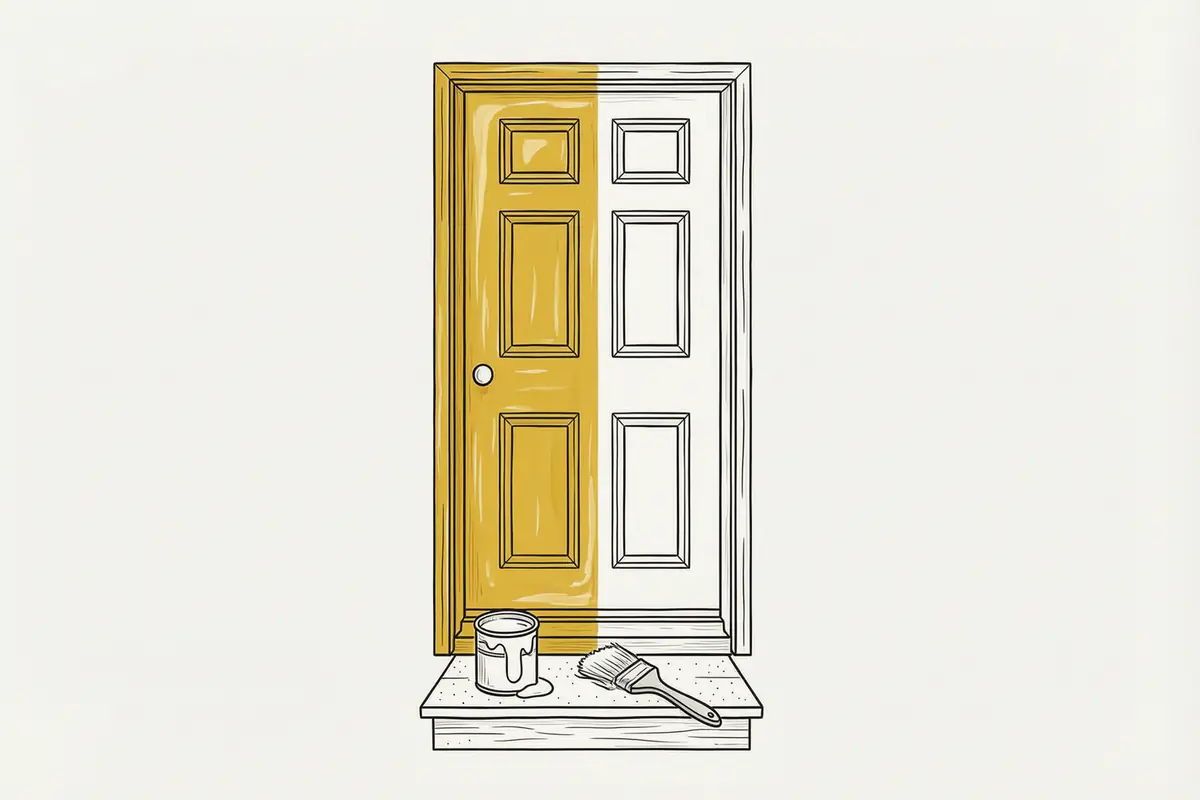
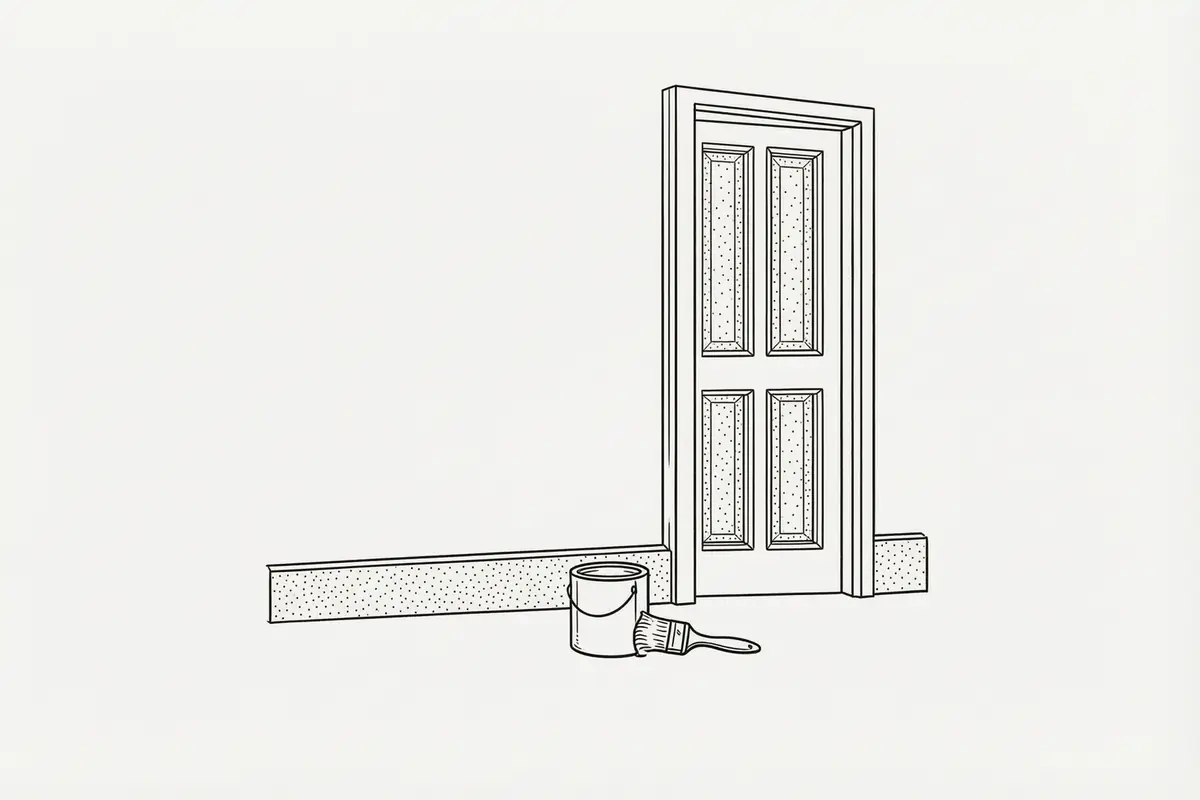
Pick a white gloss off the shelf at random and there is a fair chance it looks faintly cream within a couple of years, especially on a hallway door that catches the afternoon sun. White gloss lives on woodwork: skirting, architraves, door linings, banisters and the doors themselves. The brand matters, the base chemistry matters more, and the prep matters most of all. Get it right and a tired hallway looks sharp for years; get it wrong and you are sanding it back sooner than you would like.
Three white gloss paints we rate
We have run plenty of interior decorating jobs across Surrey on each of these, so the notes below come from the brush rather than the brochure. They split neatly into one near-traditional gloss and two modern water-based hybrids.
Crown Trade Next Generation Gloss
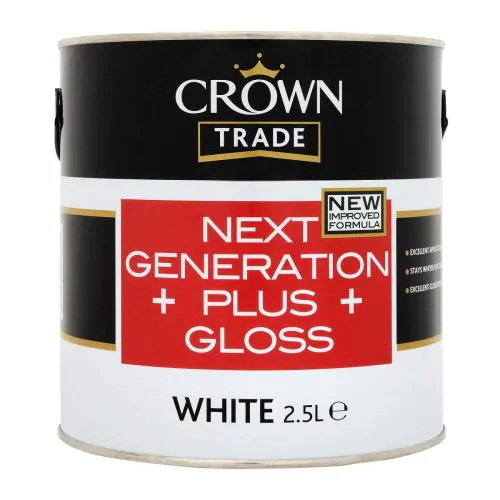
If you want a gloss that holds its white, Crown Next Generation is the one we trust. It is slow to yellow, so it keeps that clean, crisp look long after a standard oil gloss has gone buttery. It comes in a standard white rather than a stark brilliant white, which most rooms prefer anyway. The real strength is the flow: it lays off beautifully, levels out brush marks and dries to a high, even sheen. Forgiving for a careful DIYer, and a reliable workhorse for us on a full house of trim. You will find it online or at any Crown Decorating Centre.
Teknos Futura Aqua 90
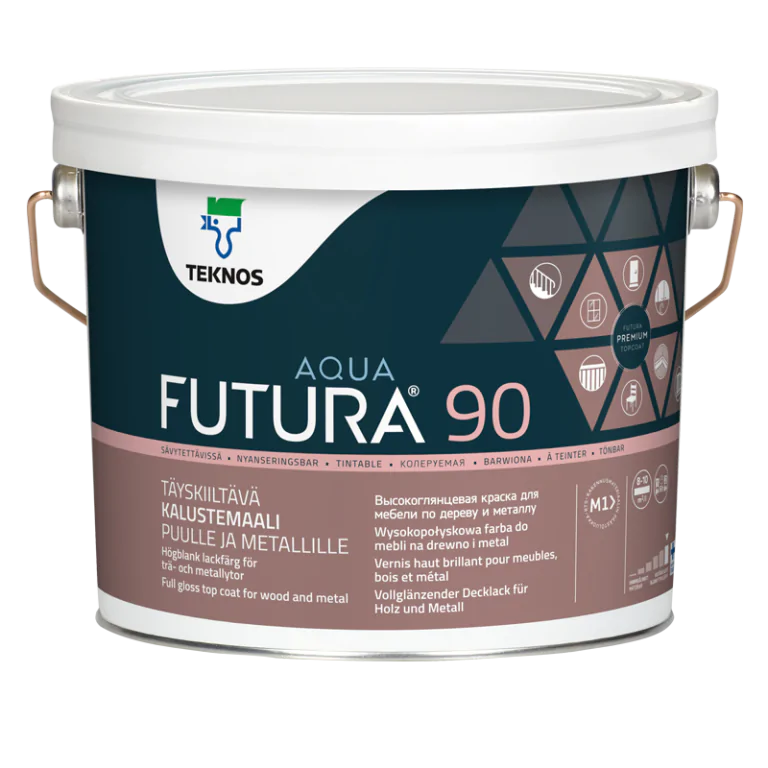
Futura 90 is a water-based hybrid that behaves like the best of both worlds: the levelling and sheen you associate with oil, with the fast drying and low odour of water-based. It comes in a classic white, and you should pair it with Teknos Futura primer so it grips properly. Its own opacity is modest, which is exactly the point — the primer does the covering, the gloss does the finish. Application is the easiest on this list, and because it dries fast you can often get primer and a couple of coats on in a single day. The high sheen then holds for years.
Johnstone's Aqua Gloss
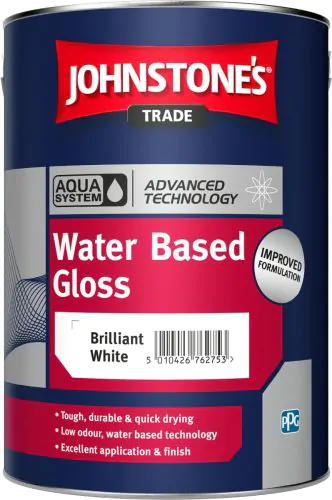
Johnstone's Aqua Gloss is a well-established hybrid system that has been a decorator's standby for years. It comes in white, brilliant white and a range of tints, and it is easy to get hold of online or at a Johnstone's Decorating Centre. The sheen is good and most people find it straightforward to apply.
It seems to carry a little more oil than newer hybrids like Futura 90, so water alone will not clean your brushes; a mix of water and white spirit does the job. It resists yellowing far better than a true oil gloss, though expect a touch of warming over a couple of years on shaded woodwork.
Oil-based or water-based gloss?
This is the choice that shapes everything else. Traditional oil-based (alkyd) gloss still gives the deepest, glassiest finish and stays a favourite on heritage woodwork where authenticity counts, which is why it features in our period window painting work. The drawbacks are real, though: stronger solvent smell, long drying times and a steady tendency to yellow.
Modern water-based and hybrid glosses solve most of that. They are low-odour, dry far quicker for same-day recoats, stay whiter for longer and clean up with less fuss; the trade-off is a slightly softer sheen and a real need for the right primer on bare or knotty timber. For most Surrey homes we now reach for a hybrid by default and keep oil gloss for jobs that genuinely call for it. If low solvent content matters to you, our guide to eco-friendly paints covers the lower-VOC options.
The right brushes and rollers
The tool makes or breaks a gloss finish, and oil and water-based paints want different bristles.
- Oil-based gloss: use a natural-bristle brush such as a Hamilton Perfection, which holds and releases oil paint cleanly. Oil gloss has a reputation as a brush killer; the fix is simple, just wet the brush and spin it out in a bucket of water every half hour to stop the paint setting in the heel.
- Water-based or hybrid gloss: use a synthetic brush with firm bristles that keep their shape, like the Hamilton Prestige Synthetic. Soft brushes drag and leave tramlines in fast-drying water-based gloss.
- Rollers for larger surfaces: a foam roller suits sticky oil gloss; use a fresh tray each time so dust and grit do not contaminate the surface. For water-based gloss a fine microfibre roller, such as a Two Fussy Blokes smooth sleeve, holds plenty of paint and lays it down evenly.
How many coats, and how to lay it off
Plan on two coats of gloss over a primer or undercoat. On bare or previously oil-painted timber that base layer is not optional; it is what gives you opacity and adhesion. Skimping here is the most common reason a gloss job looks patchy.
For the smoothest result, roll a thin, even film, then lay it off straight away with light single passes of an almost-dry brush in the direction of the grain. Keep a wet edge, do not overwork it, and wipe down with a tack cloth before each coat to lift dust. Always check the tin for recoat times: too soon and you drag the first coat. Some hybrids recoat in a few hours, true oil gloss often wants overnight.
Why white gloss goes yellow, and how to slow it
Yellowing is mainly an oil-based problem. The oils in alkyd gloss oxidise in contact with air, leaving a yellow tint that builds over time. The cruel twist is that UV light bleaches it back a little, so gloss in a dark hallway, cupboard or north-facing room yellows fastest because no light reaches it. You cannot stop it entirely on oil gloss, but you can slow it right down:
- Choose a water-based or hybrid gloss for anywhere that stays shaded; they yellow far more slowly than oil.
- Pick a quality gloss specifically formulated to resist yellowing, like the Crown above, rather than a budget tin.
- Let each coat dry fully before recoating; trapped, under-cured paint discolours faster.
- Keep rooms reasonably ventilated and avoid extremes of damp and heat while the paint cures.
Prep is what actually decides the finish
Choosing the right gloss is the easy part. Sanding back to a sound, keyed surface, filling dents and caulking gaps, then priming bare or stained patches is what separates a finish that lasts from one that flakes. Our guide on preparing surfaces before painting walks through the steps that apply just as much to woodwork as to walls.
Two snags trip people up most. Gloss that stays tacky days later is almost always down to recoating too soon, painting in cold or damp conditions, or going over a shiny surface that was not keyed; our piece on why paint does not dry properly covers the causes. And gloss is not only for skirting and doors: the same hybrids work well on metal radiators and railings once primed, the approach we set out for painting a radiator without it flaking around the valves.
If you would rather have crisp, hard-wearing white gloss laid on properly the first time, our team covers Surrey and South West London. Get in touch for a free, no-obligation quote and we will talk through the right paint and finish for your woodwork.