In this article
Walk into any DIY shed and you will find a whole aisle of white tins, all promising the same thing. Yet the difference between a wall that looks flat, even and rich, and one that looks patchy with roller marks showing through, often comes down to which emulsion went on and how it was applied. Over the years our painters have rolled out thousands of litres of the stuff across Surrey homes, from new-build boxrooms in Woking to high-ceilinged Victorian front rooms in Guildford, and we have formed some firm opinions about what is worth your money.
This guide walks you through how to choose the best emulsion paint for your job, what the marketing terms actually mean, how we apply it, and then rounds up five popular tins with our honest take on each. Whether you are freshening up a hallway or painting a whole house, the aim is to help you buy once and buy right.
Some links in this article go to Amazon. As an Amazon Associate we earn from qualifying purchases — it costs you nothing and helps keep guides like this free.
What is emulsion paint, exactly?
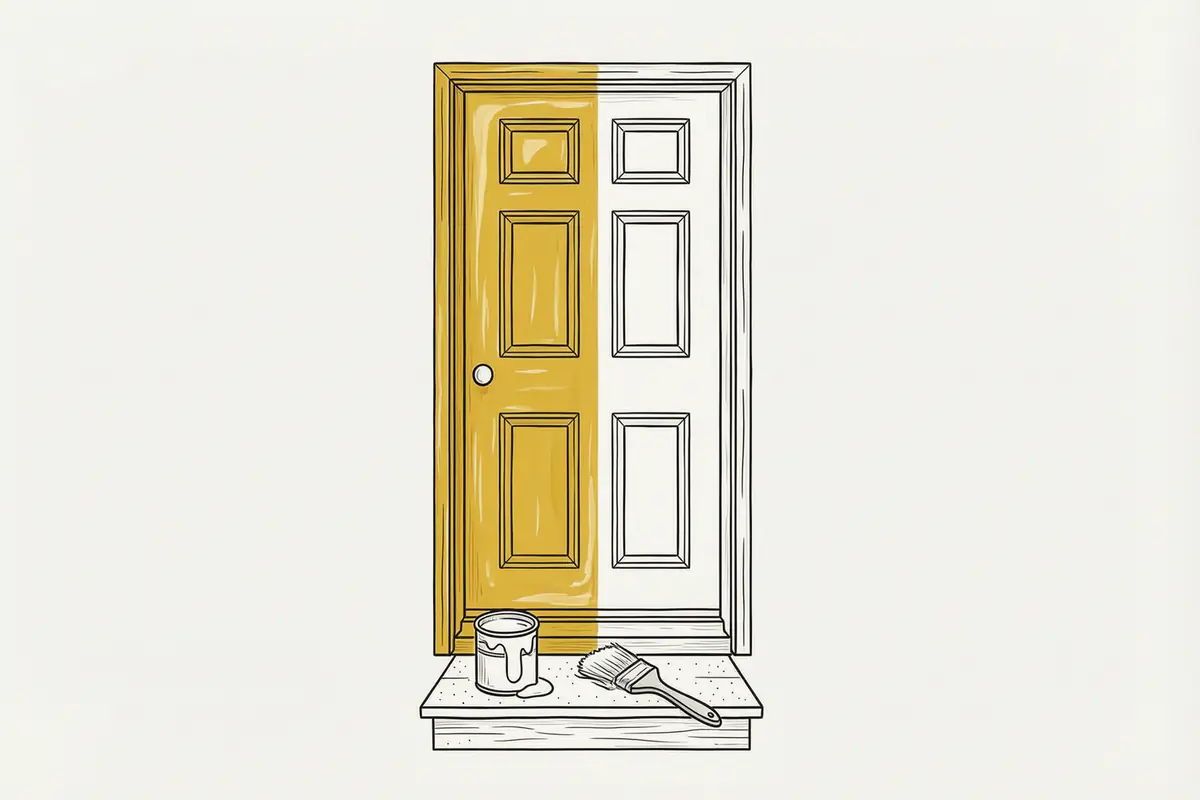
Emulsion is a water-based paint for interior walls and ceilings: pigment and a vinyl or acrylic binder suspended in water. It thins with water, washes off brushes under the tap and dries fast — touch-dry in one to two hours, ready to recoat in two to four. The more acrylic in the binder, the tougher the dried film; budget tins lean on cheaper vinyl. Trim paints for skirting, doors and window frames are a different thing entirely, curing far harder: put emulsion on a door and it stays soft, sticks to the frame and scuffs off at the first knock.
The two things that separate a good emulsion from a poor one are opacity (how well it hides what is underneath in a single coat) and how forgivingly it flows off the roller. Cheaper tins tend to be thinner, so you chase them around the wall and still see the old colour grinning through. Better tins hold more solid pigment, cover in fewer passes and level out as they dry.
Matt, washable or durable matt: which finish?
The single most useful decision is the finish, because it governs both how the wall looks and how it holds up.
- Standard matt — the go-to for most ceilings and low-traffic walls. It is flat and non-reflective, which is exactly why it hides lumps, filler patches and slightly uneven plaster so well. The trade-off is that it marks easily, and scrubbing a scuff burnishes a shiny patch into the surface.
- Washable or durable matt — still a matt look, but with a tougher, more acrylic-rich resin so you can wipe off scuffs and fingerprints with a damp cloth. The better ones carry a Class 1 scrub-resistance rating on the tin. This is what we reach for in hallways, stairwells, kids' rooms and anywhere sticky hands land.
- Silk and soft-sheen — these carry a slight shine. They wipe well but that same sheen throws light across the wall and shows every imperfection, so they are unforgiving on older, wavy Surrey plaster. Handy in kitchens and steamy spots, though.
Our rule of thumb: matt for ceilings and bedrooms, a durable or washable matt for anywhere that gets used hard. If you are choosing paint for a steamy or splash-prone room, our guide to paint finishes for bathrooms and kitchens goes into more detail on moisture and mould resistance.
Contract vs premium emulsion: what's the difference?
You will see two broad tiers. Contract matt is the cheap, high-coverage trade paint decorators use to blast out new-build sites and rented flats. It is thin, dries dead flat, has almost no wipeability and marks readily, but it goes on fast and is brilliant value for a first coat or a mist coat — under £2 a litre in a big tub, against £7 to £10 a litre for a premium retail matt. Premium emulsion holds more pigment and binder per litre, so it covers better, gives a richer flat finish and, in its durable versions, actually stands up to cleaning.
In practice we often combine them: a cheap contract coat to seal and even things out, then a premium topcoat for the finish you actually live with. For a landlord repaint or an end-of-tenancy refresh, contract matt on its own is perfectly sensible.
Coverage, opacity and how much you'll need
Most emulsions quote around 12 to 14 square metres per litre per coat, but treat that as a best case on an already-painted, sealed wall. Bare plaster, strong colour changes and textured surfaces all drink more.
Here is the sum we do on a survey. An average double bedroom, four metres by three with 2.4-metre ceilings, has about 33 square metres of wall. Two coats is 66 square metres; at 12 square metres a litre that is five and a half litres, so buy 10 per cent more than the maths says. Running out mid-wall and finishing from a different batch leaves a faint colour band you only notice at dusk.
Speaking of which, "one-coat" claims deserve a raised eyebrow. They can be true over a similar colour on a sound surface, but going light over dark, or covering a bold feature wall, will still want two. We break the maths down properly in how many coats of paint you really need, and if you are painting out a strong shade, how to paint over dark walls covers the priming and coats that actually get you there without ghosting.
The mist coat: don't skip it on new plaster
Fresh plaster is porous and slightly alkaline. Paint it straight with full-strength emulsion and the plaster sucks the moisture out unevenly, leaving a patchy sheen that can peel away in sheets later. The fix is a mist coat: a first coat of standard matt or contract emulsion thinned with around 20 to 30 per cent water, worked in so it soaks into the surface rather than sitting on top. It will look streaky — normal, it is a sealer, not a finish.
Let the plaster dry out fully first: roughly a week for a skim coat, up to four weeks for full-depth plaster, longer in a cold room — wait until every dark patch has gone uniformly pale. Give the mist coat 24 hours, then apply two normal coats. Contract matt is ideal because you are watering it down anyway. And do not seal new plaster with diluted PVA: it forms a glaze the emulsion cannot bond to, and the whole lot can shear off later.
Walls vs ceilings
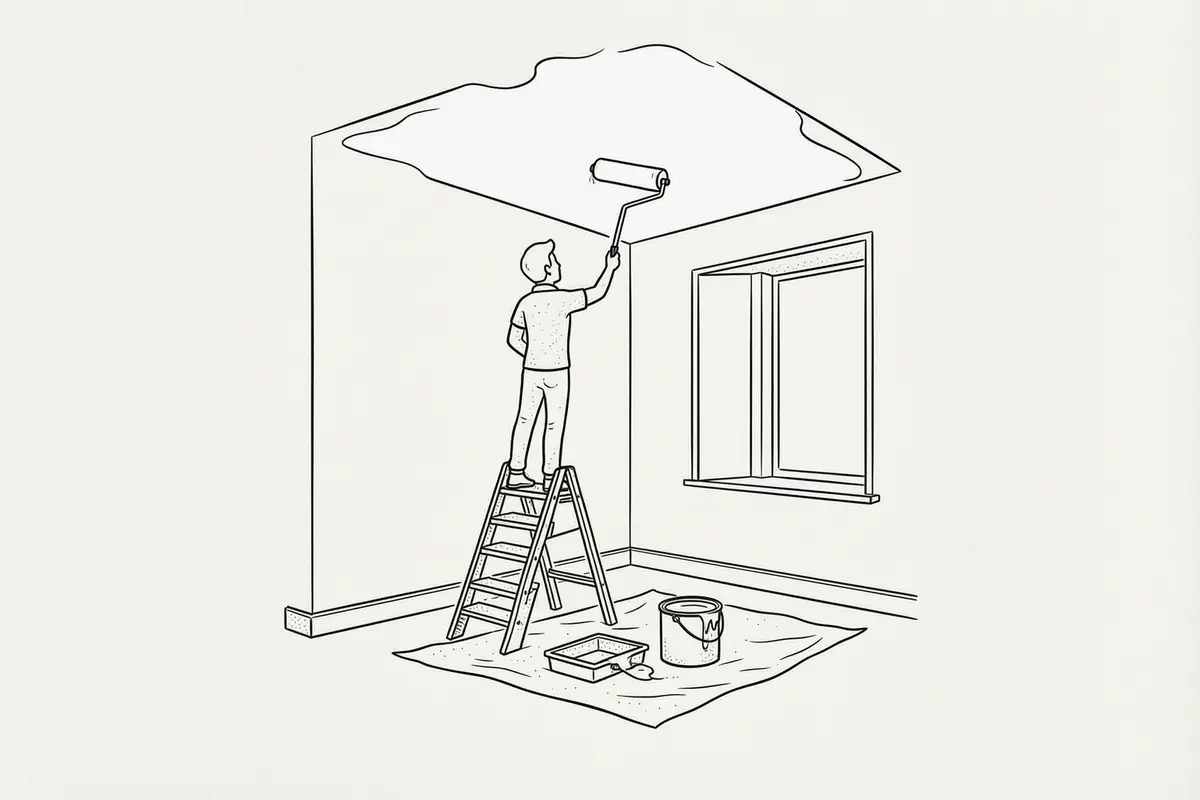
Ceilings are their own small ordeal. A dedicated ceiling paint, or a plain contract matt, is usually the pragmatic choice: dead flat to hide imperfections, and often available in a "goes on pink, dries white" formula so you can see where you have been. Roll a ceiling in one session, working away from the window so the light shows you the wet edge — picking up a dried edge later leaves permanent lap marks.
For walls you generally want a little more quality and, in busy rooms, that washable durability. There is no need to buy fancy premium emulsion for a ceiling nobody touches.
The right roller, brush and conditions
The sleeve matters more than people think. For emulsion on ordinary walls our painters run a 9-inch roller with a medium-pile sleeve, around 10 to 12 millimetres — enough to hold a proper load without leaving orange-peel texture. Go short-pile only on dead-flat new plasterboard, long-pile (15 millimetres plus) on textured or artexed surfaces, and choose microfibre over bargain foam — it holds more and sheds less. For cutting in, a 2-inch (50-millimetre) angled synthetic brush is the everyday tool, and on a whole room a roller bucket and grid beats a tray.
Conditions matter too. Emulsion behaves best between roughly 10 and 25 degrees with a little ventilation. Below 10 it dries slowly and can dry patchy; on a wall in direct sun it flashes off so fast you cannot keep a wet edge. Do not blast radiators to force-dry between coats.
How we paint a wall with emulsion, step by step
Whatever tin you buy, this is the sequence that gets the finish.
- Clear and clean. Furniture out or centred and sheeted. Wash grubby areas with sugar soap and rinse; paint does not stick to grease.
- Fill and sand. Fill cracks and dents, let the filler dry, sand it flush with 120-grit, then give the whole wall a light once-over with 180-grit and dust down. Our full wall preparation guide goes deeper on this stage.
- Spot-prime the patches. Bare filler is more porous than the wall around it; prime each patch with a thinned dab of emulsion or the finished wall will show a dull halo over every repair.
- Cut in one wall at a time. Brush a neat band along the ceiling line, corners and skirting, then roll that wall while the cut-in is still wet so the two textures blend.
- Roll in sections. Lay the paint on in a rough W over a metre square, fill it in, then lay off with light strokes in one direction. Never re-roll paint that has started to tack up.
- Respect the recoat time. Most emulsions recoat in two to four hours — check the tin and believe it. Recoating too soon drags the first coat off in sticky rolls.
- Second coat, same method. Two full coats is the standard. Check the finished wall with a light held at an angle; misses hide from straight-on light.
The best emulsion paints, reviewed
Here are five widely available tins that come up again and again on our vans and in customers' garages. We have grouped them from everyday premium down to bargain contract trade paint, with a note on where each one earns its place.
Dulux Matt Emulsion — the reliable all-rounder
Dulux is the tin most people picture, and for good reason. This matt emulsion for walls and ceilings has genuinely good opacity, flows nicely off a roller and levels out to an even flat finish that forgives ordinary plaster. It is not the cheapest per litre, but the 2.5-litre pure brilliant white is a dependable choice for a bedroom or living room where you want a fuss-free result first time. If you only buy one tin and want to stop thinking about it, this is a safe pick.
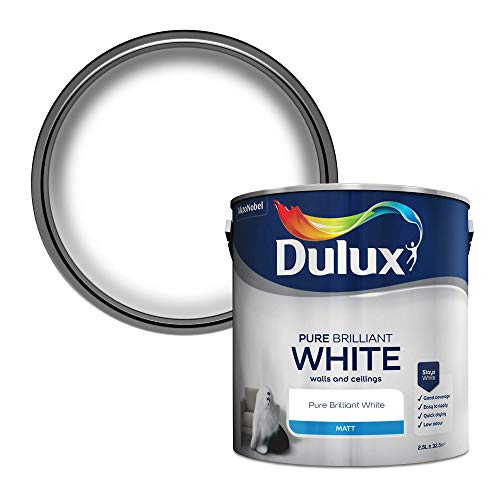
Dulux Matt Emulsion Paint For Walls And Ceilings - Pure Brilliant White 2. 5 Litres
£18.99 — Amazon price when we checked (July 2026); see the listing for today's price
View on Amazon →Crown Matt Emulsion 7.5L — best value for big jobs
When you are doing a whole house or a large open-plan space, the 7.5-litre tin changes the economics completely. Crown's matt emulsion is a solid, even trade-friendly white that covers well and works out noticeably cheaper per litre than buying several small tins. Our painters like having a big tub on the go for consistency — every wall comes from the same batch, so there is no faint colour drift between rooms. Buy the large size only if you will actually use it, as opened emulsion has a limited shelf life.

CROWN Matt Emulsion Paint 7.5L Pure Brilliant White
£15.98 — Amazon price when we checked (July 2026); see the listing for today's price
View on Amazon →Johnstone's One Coat Matt — for a quick single-colour refresh
Johnstone's is a respected trade brand, and their one-coat matt is aimed squarely at people who want to be done in an afternoon. In fairness, a genuine one-coat result depends heavily on the surface: over a similar existing colour on sound walls it can genuinely save you a pass, but do not expect miracles going white over a dark feature wall. It is thicker-bodied than a standard matt, so do not over-spread it — let it do the work. Used realistically — a like-for-like freshen-up — it lives up to the promise more often than not.
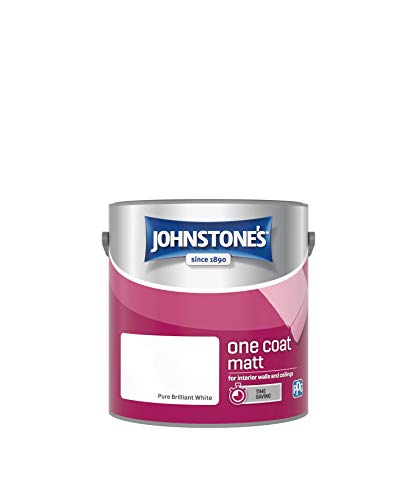
Johnstone's One Coat Matt Emulsion Paint - Pure Brilliant White 2.5L
£14.97 — Amazon price when we checked (July 2026); see the listing for today's price
View on Amazon →Johnstone's Jonmat Contract Matt 5L — the decorator's workhorse
This is the tin you will see on the back of half the decorators' vans in Surrey. Jonmat contract matt is not glamorous: it is thin, dead flat and has next to no wipeability. What it does brilliantly is seal, mist-coat fresh plaster and lay down cheap, even base coats over big areas at a rock-bottom price per litre. For new plaster, a landlord repaint or an obliterating first coat under a premium topcoat, it is hard to beat on value. Just do not expect a finish you can scrub.

5LTR - JOHNSTONES JONMAT CONTRACT MATT EMULSION BRILLIANT WHITE
£7.50 — Amazon price when we checked (July 2026); see the listing for today's price
View on Amazon →Crown Matt Emulsion 2.5L — a tidy small-room option
If you just have one room, a boxroom or a bit of touching-up to do, the 2.5-litre Crown matt is a sensible, well-priced pick. It gives a clean flat white with dependable coverage, and the smaller tin means you are not left with four litres of drying-out emulsion for a job that needed one. Think of it as the everyday, no-drama choice for a single space rather than a whole-house campaign.

Crown Pure Brilliant White Matt Emulsion 2.5 Litre
£9.57 — Amazon price when we checked (July 2026); see the listing for today's price
View on Amazon →Common emulsion mistakes we get called in to fix
A fair slice of our work is rescuing jobs that went wrong. The same problems come up again and again.
- Peeling sheets on new plaster. Almost always a skipped mist coat, or plaster sealed with PVA. The fix is scraping the loose film back, feathering the edges and starting again with a mist coat.
- Patchy sheen and dull halos. Filler patches painted over without spot-priming, or paint over-rolled as it dried. Spot-prime and apply one more full, unhurried coat.
- Picture framing. A visible band around each wall where the brushed cut-in dried before the roller arrived. Work one wall at a time; the fix is another full coat rolled close to the edges.
- Roller texture set hard. A cheap sleeve, an overloaded roller or thick one-coat paint pushed too far. A light 180-grit sand, dust down, recoat with a decent medium-pile sleeve.
- Emulsion on woodwork and radiators. It scuffs off skirting and softens on a hot radiator; it needs keying back and repainting with the right trim or radiator paint.
- One heroic coat over a dark colour. The old shade ghosts through. Budget for a base coat plus two finish coats and the problem never exists.
When it's worth calling in a professional
Most single rooms are a fair DIY weekend. Where we would honestly say get help: stairwells with drops that need proper access equipment, fragile lath-and-plaster ceilings in period homes, walls with damp or staining that needs diagnosing before anything goes on top, and whole-house repaints where the hours defeat evenings-and-weekends painting. As a general UK guide, a decent decorator charges somewhere around £150 to £250 a day, and a straightforward room is typically a one-to-two-day job including preparation. Our painting contractor team handles everything from single rooms to full refurbishments across Surrey.
So which emulsion should you buy?
If you want the short version: buy a premium matt like the Dulux for the rooms you live in, size the tin to the job (a 7.5-litre Crown for a whole house, a 2.5-litre for one room), and keep a cheap tin of contract matt like Jonmat in the shed for mist coats and base coats on fresh plaster. Choose a washable or durable matt for hallways, stairs and children's rooms, and save the flat matt for ceilings and quiet bedrooms. Whatever you pick, decent preparation and two proper coats will beat an expensive tin rushed onto a dusty wall every single time.
And if the job is bigger than a wet weekend — high ceilings, tired plaster, a full house to turn around, or you simply would rather it were done properly and quickly — that is exactly what we do. Our interior painters cover Guildford, Woking, Godalming and the rest of Surrey, and we are happy to advise on the right paint for each room. Get in touch for a free, no-pressure quote and we will talk it through.
Frequently asked questions
Can you paint wood or woodwork with emulsion?
No — emulsion is not designed for woodwork and will not last on it. It dries to a soft film that scuffs off skirting, chips on door edges and stays tacky enough to stick doors to their frames. Use a proper trim paint instead — water-based satin, eggshell or gloss over a suitable primer.
Can you paint radiators with emulsion?
No. Standard emulsion is not formulated for heat cycling: it can soften, discolour and eventually flake as the panel warms and cools. Use a dedicated radiator paint or a heat-resistant satin or gloss enamel, applied to a radiator that is switched off, stone cold, cleaned and lightly keyed with fine abrasive. Emulsion belongs on the wall behind, not the metal.
Can you paint over gloss with emulsion?
Not directly — emulsion will not grip a shiny surface and will peel or scratch off. Degrease with sugar soap, sand with 120- to 180-grit to kill the shine, apply a good adhesion primer, and only then emulsion. On woodwork, though, the better answer is almost always another trim paint.
What is the difference between contract matt and retail matt?
Contract matt is a budget trade paint with less binder: thin, completely flat, breathable and cheap, but with almost no resistance to wiping. Retail or premium matt carries more pigment and tougher resin, so it covers better, looks richer and, in durable versions, can be cleaned. Use contract matt for mist coats, base coats and landlord repaints; use retail matt for the rooms you live in.
What is a mist coat and when do you need one?
A mist coat is a first coat of emulsion thinned with 20 to 30 per cent water, and you need one whenever you paint bare new or freshly skimmed plaster. It soaks in and seals the porous surface so the full-strength coats bond properly instead of peeling later. Wait until the plaster has dried uniformly pale, mist-coat, leave it 24 hours, then apply two normal coats. Never substitute diluted PVA.
Durable matt vs standard matt — which for a hallway?
Durable (washable) matt, every time. Hallways and stairs take the most punishment in the house — shoes, bags, bikes and trailing hands — and standard matt marks easily and burnishes shiny if scrubbed. A durable matt keeps the same flat look but lets you wipe scuffs off with a damp cloth, and typically postpones the next repaint by years.
Product prices and availability shown were correct when checked in July 2026 and may have changed. Certain content that appears on this site comes from Amazon. This content is provided "as is" and is subject to change or removal at any time.