In this article
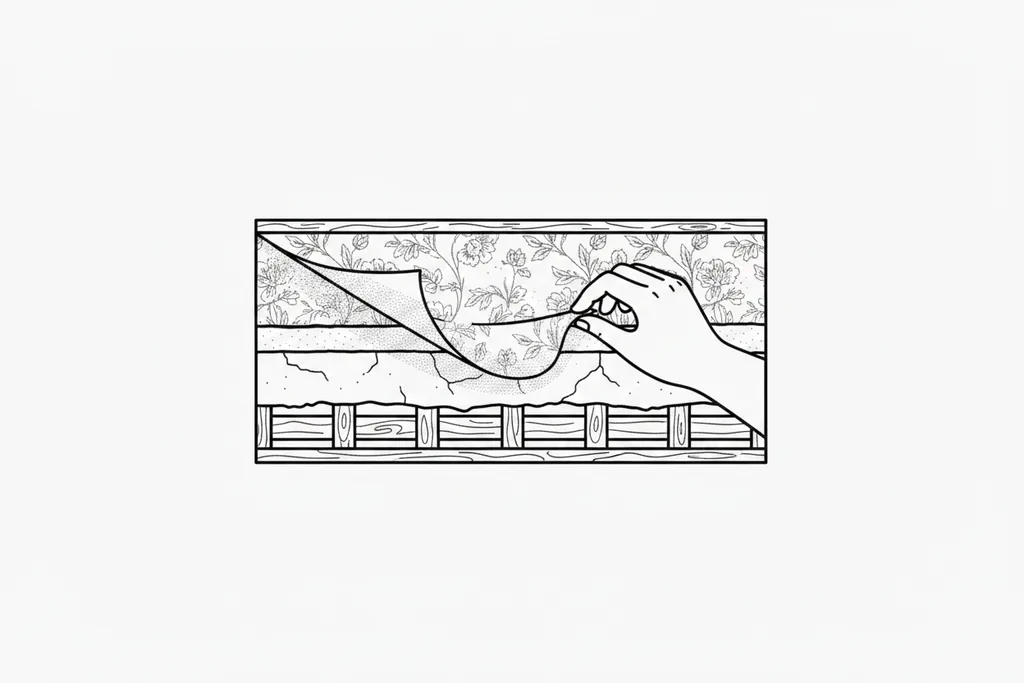
Peel back a corner of dated paper in a Victorian Surrey villa and you rarely find a clean wall. You find distemper over lime plaster, a layer of 1970s vinyl that should never have gone up, and a patch of damp where someone sealed in moisture that had nowhere to go. Restoring period wallpaper is far less about choosing a pretty pattern than about reading what is already there and not making the building worse.
We are Ben & Roman, the team behind Painters and Decorators Surrey, and a good share of our work is in older homes across Guildford, Woking, Cobham and the wider county. This guide covers how heritage wallpaper restoration should be approached, the mistakes that cost owners money, and where the rules genuinely bind.
Why period wallpaper needs a different approach
A pre-1919 home was built to breathe. Solid lime-plastered walls absorb a little moisture and release it again, and the original distemper, limewash and early papers were all vapour-open by design. The damage you see in period interiors is almost always the result of fighting that with modern, sealed materials.
The usual culprit is impermeable vinyl paper or a film-forming primer slapped straight onto old plaster. Moisture that used to pass through the wall now condenses behind the covering, and you get blown plaster, salt staining, peeling seams and, before long, mould. On a listed home it matters more again, because the plaster itself is often part of what the listing protects.
Every heritage job comes back to one principle: keep the original fabric, keep things breathable, and keep your work reversible where you can. It is the same logic we follow when decorating a listed building in Surrey, and it shapes the whole sequence below.
Our approach to heritage wallpaper restoration
1. Survey and assessment
Nothing comes off the wall until we know what is on it. The survey is non-destructive: we read the surfaces under raking light, check moisture with a meter and, where it helps, lift a tiny sample from an inconspicuous spot. We are trying to identify:
- the original substrate, whether that is lime plaster, distemper or limewash;
- backing and decorative layers such as lining paper, Anaglypta, Lincrusta or canvas;
- the original pattern and colour scheme, in case the owner wants it matched.
If a wall is reading damp, that has to be understood before any paper goes near it. Papering over a moisture problem only hides it for a season, so it is worth knowing how to spot and treat damp at this stage rather than after the new scheme is up.
2. Gentle removal and surface stabilisation
Stripping old paper from period plaster is the moment most likely to cause harm, so we take it slowly. Aggressive steam can drive water deep into soft lime plaster and break down its binders, loosening sound plaster from the lath behind. Instead we ease paper away in sections, softening stubborn adhesive with a gentle poultice rather than soaking the whole wall, and we watch for anything that sounds hollow.
Where the plaster needs making good, the repair should match the original. On solid walls in a pre-1919 home that means a lime-based filler, not modern gypsum or cement, which is harder and less breathable than the surface around it and tends to crack at the joint.
Priming is where many jobs quietly go wrong. A standard PVA bonding agent forms a sealed film on lime plaster, trapping moisture and giving later paper nothing reliable to grip, so blisters and lifting follow. A breathable, water-based primer made for absorbent or friable surfaces is the safer choice on heritage walls.
3. Choosing the right paper, and hanging it well
The paper itself should work with the wall, not against it. For period interiors we favour breathable, non-woven papers and traditional lining or hand-blocked papers over heavy vinyls, with water-based, low-VOC inks. Plenty of UK heritage ranges fit the brief, including Little Greene, Cole & Son and Zoffany's archive collections, which reproduce period patterns at a believable scale.
Scale matters more than people expect. A pattern that is too large or too modern fights the proportions of a period room, the cornice and the picture rail. In rooms with tall ceilings and deep mouldings, each drop has to be measured, plumbed to a struck vertical and trimmed tight into the detail, with long repeats matched across chimney breasts and bays.
This is precise, patient work, and it is where our wallpaper hangers earn their keep. For a fuller worked example, our Grade II listed wallpapering case study walks through the prep, lining and hanging across several rooms of a protected home.
Common mistakes that damage heritage interiors
Most of the worst damage we are called in to undo was done by well-meaning hands. These are the errors that turn a redecoration into a repair bill:
| Mistake | What it causes |
| Impermeable vinyl on solid lime walls | Trapped moisture, blown plaster, salt staining and timber decay. |
| PVA as a primer on lime plaster | A sealed film that blisters and lifts; poor key for the paper. |
| Aggressive steam stripping of old plaster | Water driven into soft lime; plaster loosened from the lath. |
| Ignoring pattern scale in a period room | Prints that fight the proportions and detailing of the space. |
| Skipping listed building consent where needed | Risk of an enforcement notice and a costly reversal. |
Where the rules actually bind
For most period homes, redecorating is ordinary maintenance and needs no permission. The picture changes if the property is listed. Under the Planning (Listed Buildings and Conservation Areas) Act 1990, a listing protects the character of the building inside and out, and works affecting that character can need listed building consent. Routine repapering is usually fine, but disturbing original plaster or removing historic features such as Lincrusta or Anaglypta can cross the line, so it is worth a quick check with the local conservation officer before you start.
If you are still deciding between paper and paint, our piece on wallpaper installation myths clears up a few assumptions that put people off paper unnecessarily, and rooms that take a lot of moisture have their own rules in our guide to wallpaper in wet rooms.
Restoring period wallpaper in your Surrey home
Done properly, heritage wallpaper restoration leaves a room looking as though the paper had always belonged there: a fresh scheme flat against sound, breathable walls, with the original cornices and detailing left undisturbed. Done carelessly, it stores up damp and damage for the next owner to find.
If you own a period or listed property in Surrey or South West London and want it redecorated by people who will treat the building with care, we are happy to take a look. Get in touch for a free, no-obligation quote and we will talk through your rooms and the right approach for them.