In this article
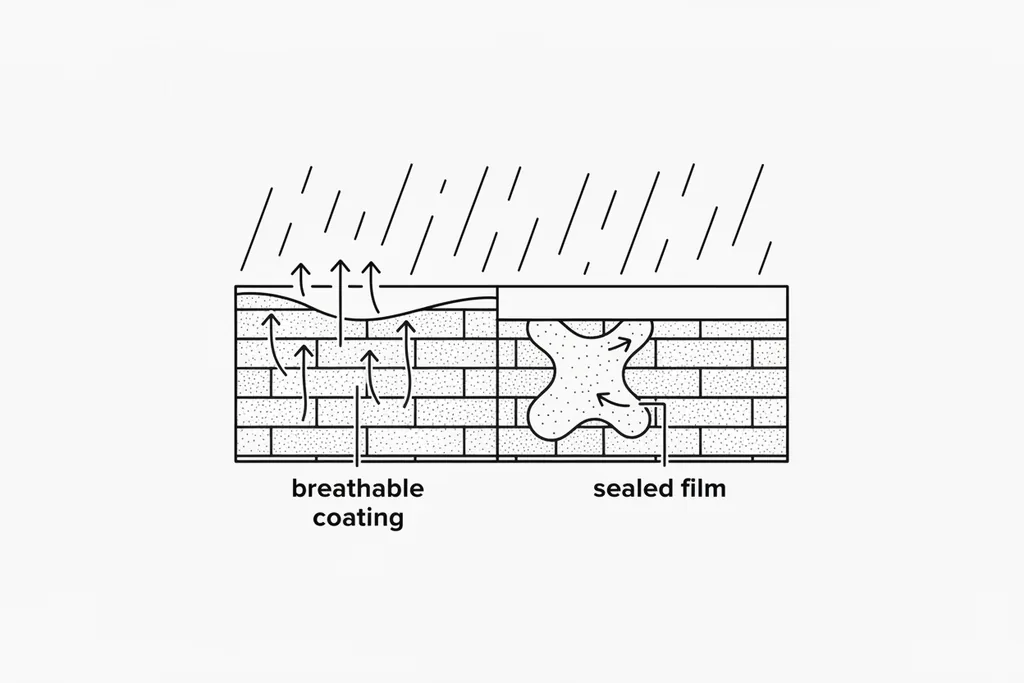
Repaint a Surrey gable in a cheap vinyl masonry paint and you can be looking at blistered render within two or three winters. The coating seals the wall, traps the moisture already in it, and the next hard frost pushes the film straight off the brick.
Surrey gets roughly 750mm of rain a year and sits largely on London Clay, which holds water and keeps walls damp through autumn, winter and spring. Choosing an exterior paint here is less about colour cards and more about vapour permeability, flexibility and how well a finish resists algae on a north-facing wall.
This guide covers what to put on masonry and timber across Guildford and the wider county, and the preparation that decides whether either actually lasts.
Why Surrey’s Climate Is Hard on Exterior Paint
Persistent damp and high humidity are the real enemies here, not the odd cold snap. Older solid-wall homes in particular need to breathe: moisture that gets in has to get back out through the wall surface rather than being capped behind a plastic film.
The faults we are called out to put right almost always trace back to the same few causes:
- Blistering and peeling where moisture is trapped behind a non-breathable film
- Green algae and black spotting on shaded, north-facing elevations
- Timber rot where water has sat in unprotected joints and end grain
- Efflorescence, the white salty bloom that surfaces on brick and render
If you are already seeing tide marks, soft render or a musty smell inside, sort the cause first. Our guide to spotting and treating damp covers the checks worth making before any paint goes on, because fresh coats over a wet wall simply fail again.
The Best Masonry Paint for Render, Brick and Stone
The single most important property for a Surrey masonry paint is breathability: a coating that lets water vapour escape while still shedding driving rain. Two systems do this well.
Silicate (mineral) paints
Mineral paints chemically bond into the masonry rather than forming a surface skin, so they cannot peel away in sheets the way a film-forming paint can.
- Best for solid brick, lime-rendered and older or period properties
- Very high breathability and strong UV stability, so colours hold for years
- Typical service life in the region of 15 to 25 years
This is the usual choice for older housing stock and anything covered by local heritage rules. If your home sits within a Surrey conservation area, a breathable mineral system is often the sensible default.
Microporous acrylic masonry paints
A good flexible acrylic suits most modern homes and is more forgiving to apply.
- Best for cement render, pebbledash and previously painted brick
- Flexible and water-repellent while still letting the wall breathe
- Typical service life of around 10 to 15 years
On shaded or damp-prone elevations, specify a version with an anti-mould or algae-inhibiting additive. It will not cure a damp problem, but it slows the green film that otherwise returns within a season.
One thing to avoid is a standard vinyl-based masonry paint. They are cheap, but the sealed film traps moisture and invites exactly the frost damage we deal with in our winter-ready exterior maintenance.
The Best Exterior Paint for Timber: Windows, Cladding and Doors
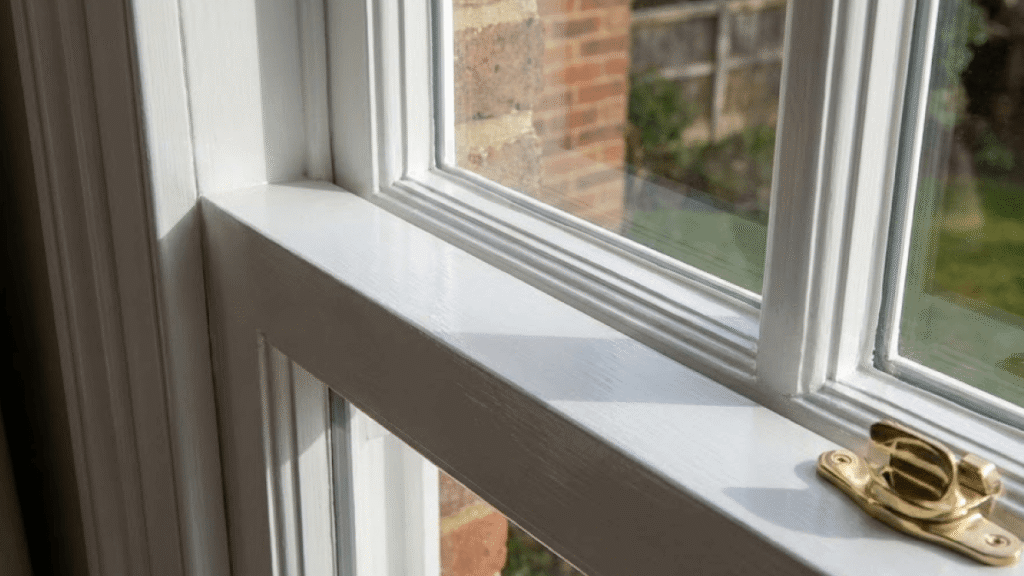
Timber moves: it swells when wet and shrinks as it dries, and a brittle coating cracks along that movement, lets water in and starts the rot cycle. So the finish has to stay flexible, block UV and carry a fungicide to hold off mould and mildew. Two systems cover most exterior joinery in Surrey.
Water-based acrylic primer and topcoat system
- Best for sash windows, doors and softwood cladding
- Low odour, low VOC, fast recoat times and very good flexibility
- Seal resinous areas with a knotting solution before priming, or sap will bleed through
Oil-modified alkyd (low-VOC) systems
- Best for hardwood frames and heritage joinery where a traditional sheen is wanted
- Choose a compliant low-VOC formulation; current UK rules cap solvent-based gloss at 130 g/litre
Either way, preparation makes or breaks the result. On previously stained timber the stain has to be fully sealed first, or it bleeds through and stops the new paint gripping. For older box frames and casements, restoration and repaint go hand in hand, which is why we treat sash window restoration and painting as one job, and the same care applies to wooden windows in period homes.
Colour, Sheen and Application
Go lighter on south-facing timber
Dark colours soak up heat, which makes timber expand and contract harder and stresses the film. On sun-baked elevations, light greys, creams and soft heritage greens hold up better and fade less.
Match the sheen to the surface
Gloss and satinwood look right on windows and doors, where the crispness reads as quality. Across large areas of render, a matt or low-sheen finish is more forgiving, hiding minor flaws and cutting glare.
Spray for big areas, brush for detail

For large expanses of cladding and render, airless spray application lays down an even film, works paint into textured surfaces a roller skips over, and covers ground quickly between showers. Fine joinery, beads and cut-ins are still best brushed, where you keep full control of a clean edge.
Rules and Regulations Worth Knowing
You don’t normally need planning permission to repaint a home exterior, but a few points still apply:
- Paints must meet current UK VOC limits; reputable products state this on the tin and data sheet
- Avoid non-breathable coatings on solid-wall and older buildings, in line with Historic England guidance
- Don’t spray in gusty conditions, where overspray can drift onto a neighbour’s car or windows
Listed buildings and some conservation areas carry tighter controls, so it is worth checking with the local authority and leaning towards low-VOC, breathable products before work starts. A good decorator will share product data sheets on request.
The Short Version
For a finish that survives Surrey’s wet seasons, the exterior paint you choose should tick five boxes:
- It lets the wall breathe rather than sealing moisture in
- It resists mould and algae, especially on shaded elevations
- On timber, it stays flexible enough to move with the wood
- It meets current UK VOC limits
- It goes onto a properly prepared, dry and sound surface
Get the product and the preparation right together and a repaint should comfortably see out years of Surrey weather. If you would like the right system specified for your own masonry and joinery, our exterior painting team is happy to take a look and give you a free, no-pressure quote.