In this article
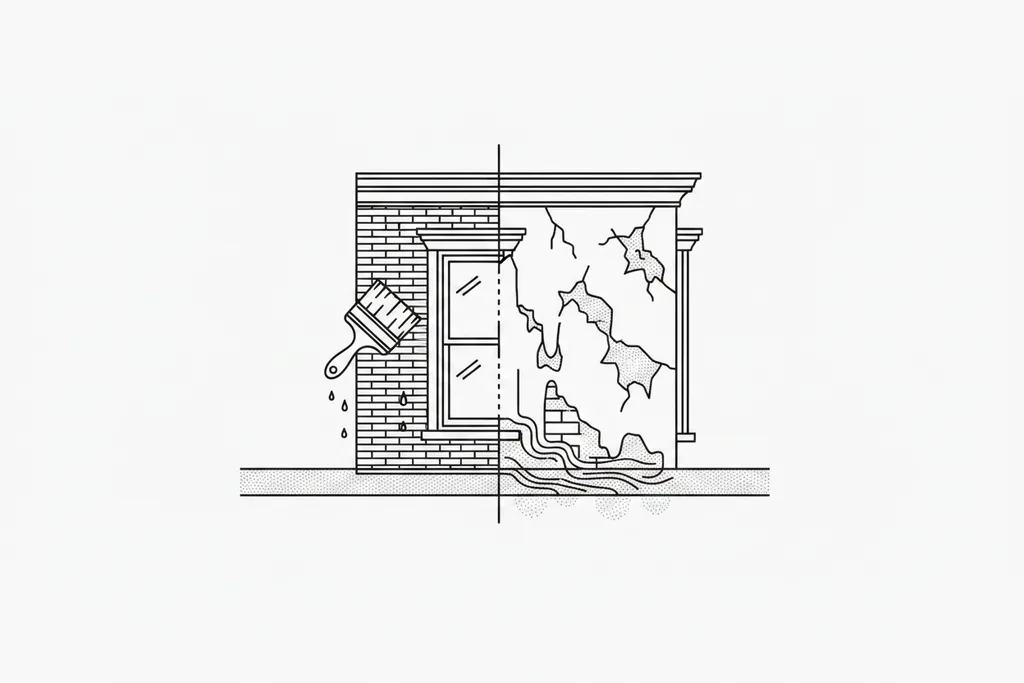
By the time the first hard frost arrives in Surrey, the damage is usually already done. Rain soaks into a hairline crack in the render over autumn, the frost expands it overnight, and by February you have a blown patch, a damp wall and a repair that costs far more than the brushful of filler that would have stopped it in October.
Exterior painting is as much about protection as appearance: a sound two-coat system sheds water, blocks UV and keeps timber and masonry dry through the wettest months. This checklist covers what to inspect, fix and paint before the cold closes the window on outdoor work.
Why winter is hard on Surrey exteriors
Surrey's temperate maritime climate is damp, frequently wet and humid, with the odd sharp frost. That combination is harder on paintwork than a steady cold snap. Water gets into a defect, freezes, expands by roughly nine per cent, then thaws, and each cycle prises the gap a little wider. This freeze-thaw weathering is why small jobs left over winter rarely stay small.
The early signs are easy to read: blistering and peeling where moisture is trapped behind the film, and green-black staining on north-facing walls that never get enough sun to dry out. If you are already seeing dark patches or musty smells indoors, read our guide on how to spot and treat damp before painting over anything, because fresh coats trap the problem rather than fix it.
1. Inspect and repair before the cold sets in
What to check on a dry day
Pick a dry day, walk the full perimeter and look closely at every elevation:
- Render and brickwork: hairline cracks, hollow-sounding patches, white salt deposits (efflorescence) and crumbling or missing mortar joints.
- Timber: windows, doors, fascias and cladding. Press suspect areas with a screwdriver. Soft, spongy wood means moisture has got in and rot has started.
- Junctions and seals: the gaps around frames, sills and where different materials meet, which are the first places water finds a way in.
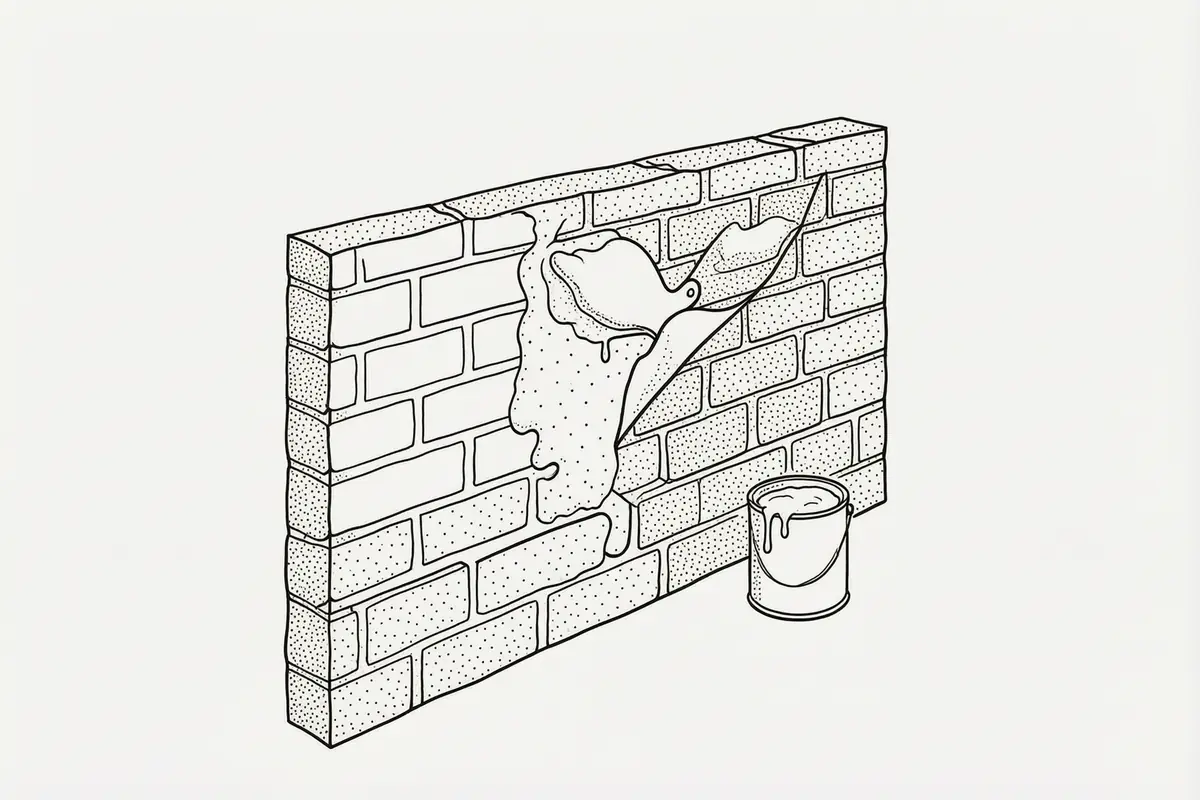
Fix what you find before temperatures drop: rake out and repoint open joints, fill cracks, then cut out and splice rotten timber and let repairs dry before coating. Most exterior masonry and woodwork paints need a surface temperature above roughly 8 to 10°C and dry conditions to cure, so leaving prep until December usually means waiting for spring.
This stage decides how long the finish lasts, and it is the part most often rushed. Our exterior painting team spends the bulk of any job on preparation rather than the topcoat, because a coating is only ever as good as the surface beneath it.
2. Choose a paint built for a wet climate
The single most useful property in a damp climate is breathability. Walls hold some moisture and need to release it. A cheap, heavily film-forming masonry paint seals that moisture in, and the trapped water pushes the coating off in blisters and flakes. The right products let vapour out while keeping liquid water from getting in. A few sensible options for Surrey homes:
- Mineral or silicate masonry paint: highly breathable and long-lasting on render and brick, which makes it a strong choice for older, solid-wall properties.
- Microporous acrylic systems: flexible coatings that let timber and render breathe while resisting driving rain.
- Anti-mould formulations: many exterior paints now include a biocide to slow algae and mould on shaded, north-facing walls.
On older and listed buildings, a breathable, mineral-based system is often the correct choice for the construction rather than just a preference. For more on matching the coating to the wall, see our guide to choosing the best exterior paint for Surrey's climate, and avoid sealing a porous old wall with a modern plastic film.
3. Protect timber windows and doors
Surrey has no shortage of period homes with timber sash windows, and joinery is where winter does its quietest damage. Bare or flaking wood drinks up rain and swells, and the paint that is left cracks and lifts. Get ahead of it with a proper sequence rather than a quick recoat:
- Sand or scrape flaking paint back to a sound edge, and back to bare wood where it has failed.
- Treat any exposed timber with a wood preservative to guard against rot before you coat it.
- Spot-prime bare areas, fill and caulk gaps, then apply two coats of exterior eggshell, satin or gloss.
- Reseal the joint between frame and masonry so wind-driven rain cannot track in behind the timber.
Done well, this keeps draughts out and the timber dry through the worst of the weather. Where windows are tired or rotten rather than simply due a repaint, full sash window restoration can put original joinery back into service, and our guide to painting wooden windows in period homes walks through the technique in detail.
4. Clear the gutters and drainage
Fresh paint will not save a wall that a blocked gutter is soaking from above. Leaves pack into downpipes through autumn, water backs up and spills down the face of the building, and you get streaking, saturated fascias and damp tracking into the wall behind. It is the most common reason a smart exterior goes wrong over one winter. A short routine sorts it:
- Clear gutters at least twice a year, in late autumn and again in early spring.
- Check for sagging runs and loose brackets, and make sure the joints are not leaking.
- Confirm downpipes discharge well clear of the foundations rather than pooling against the wall.
If you are repainting fascias and soffits anyway, do the gutter check while the access is already up.
5. Don't forget commercial exteriors
Shops, offices and units have the same exposure as homes, with the added problem that tired signage, stained cladding or visible mould reads badly to customers all winter. Exterior work on a trading premises is usually best done out of hours or at weekends to keep disruption down, and on a sound, properly prepared surface so it lasts. We handle that side through our commercial painting work, from retail frontages to industrial cladding.
6. Get the timing right
Plenty of exterior prep is within a confident homeowner's reach. Bring in a professional for work at height, large areas of render, or older properties where lead paint may be present, as it was common before the 1970s and needs careful handling.
The best time to book exterior decorating in Surrey is early autumn, through October and into November, while temperatures are still high enough for coatings to cure and you can seal the property before the wet sets in. Leave it much later and you are usually pushed into spring. It also helps to understand why paint sometimes fails to dry or cure in cold, damp air, since that is exactly why timing matters so much outdoors.
A little prevention goes a long way
Surrey winters are trending wetter rather than colder, which puts even more weight on keeping water out and letting walls breathe. A morning spent inspecting, a few small repairs and the right breathable coating will spare you the far larger bill that follows a winter of water getting in.
Whether it is a Victorian terrace in Guildford, a family home in Woking or a commercial unit, Ben and Roman at Painters and Decorators Surrey are glad to take a look. Request a free exterior assessment and quote, or call 01483 694110, and head into winter with the place properly buttoned up.