In this article

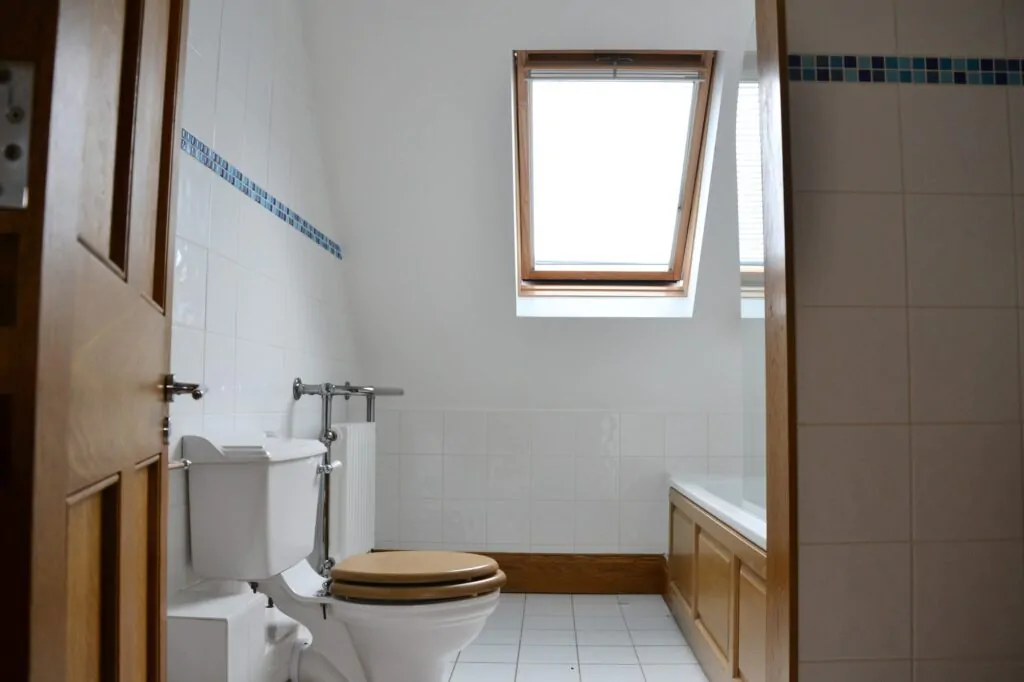
Black speckles creeping back above the shower within a few months of decorating is one of the most common bathroom complaints we hear. Nine times out of ten the cause is the same: ordinary matt emulsion brushed onto a ceiling that takes a daily steaming. Standard contract matt has no business in a bathroom. The right paint, applied over properly prepared plaster, will shrug off the steam and stay clean for years.
Here is how we choose bathroom ceiling paint on our Surrey jobs, and the prep that makes it last.
Why bathroom ceilings need a specialist paint
A bathroom ceiling cops the worst of the room's moisture. Warm, wet air rises, hits the cooler plaster overhead and condenses there first. On standard emulsion that constant wet-then-dry cycle softens the film, lifts it from the plaster and gives mould spores the damp, still surface they need to colonise.
Bathroom and kitchen paints are built for exactly this. The better ones combine three things:
- A tougher, more moisture-resistant film that beats off condensation and can be wiped down.
- A built-in anti-mould (fungicidal) additive in the tin, so resistance is baked in rather than sprayed on top.
- A finish that copes with regular cleaning without burnishing to a shine where you rub.
That mould resistance is the part people skimp on, and it matters most in a Surrey bathroom. Many local homes are Victorian or Edwardian with solid walls, single small windows and the cooler, damp winters the county is known for, so condensation has every chance to settle. If the black spotting keeps returning whatever you paint over it, the real problem is usually moisture in the structure, not the paint, and it is worth reading our guide on how to spot and treat damp before you redecorate.
Matt, mid-sheen or gloss on a ceiling?
Sheen level is the decision most people get wrong. The instinct is to reach for a wipeable soft-sheen, but on a ceiling that backfires.
A higher sheen reflects light, and light skating across a ceiling throws every roller mark, filler patch and lath ripple into sharp relief. Older Surrey ceilings are rarely dead flat, so a shiny finish overhead tends to look worse, not smarter. The sweet spot for most bathroom ceilings is a dedicated bathroom emulsion with a low matt or near-matt finish. You still get the moisture and mould protection, but the surface stays calm and hides the lumps and bumps of an older ceiling.
Keep the mid-sheen and soft-sheen products for the walls, where the extra wipeability earns its keep around the basin and bath. For more on matching sheen to the room, see our breakdown of the right paint finishes for bathrooms and kitchens. Full gloss has no place on a bathroom ceiling at all; save it for woodwork.
Paint types, briefly
Almost every modern bathroom ceiling we paint is a water-based acrylic emulsion, and for good reason:
- Acrylic bathroom emulsion is the default. It is flexible, low-odour, low-VOC, dries quickly between coats and forgives minor surface imperfections. Look for one labelled specifically for bathrooms or kitchens with moisture and mould resistance.
- Anti-condensation or thermal-backed paints add a layer with a slightly warmer surface, which can cut how readily condensation forms. They are a useful extra on a cold, north-facing or persistently steamy ceiling, but they are not a fix for a real damp problem.
- Oil-based and solvent paints are best avoided overhead. They yellow over time and form a less breathable film, which traps moisture against the plaster rather than letting the room dry out.
For UK availability and service back-up, we mostly specify Crown, Dulux and Johnstone's bathroom and kitchen ranges, with Farrow & Ball's Modern Emulsion where a client wants a particular shade. All are stocked through proper trade suppliers across Surrey, which beats an unknown bargain tin every time.
Preparation is what makes it last
The paint only does half the job. We have lost count of the ceilings that failed not because of the product but because of what happened underneath it. Good prep is non-negotiable, and it follows the same principles as any wall, covered in our guide to preparing walls for painting. On a bathroom ceiling the order runs like this:
- Treat any mould first. Painting over black spotting just buries it. We kill it with a proprietary fungicidal wash, let it work, then rinse. Skip this and the mould grows straight back through the new coat.
- Make good the surface. Fill cracks and screw holes, sand back proud filler and feather repairs flat. On a ceiling, every defect shows once the light catches it.
- Seal bare or fresh plaster. New plaster gets a thinned mist coat so the topcoats bind rather than peel. Patch repairs are spot-primed so they do not flash through as dull spots.
- Get the room dry. Paint into a dry, ventilated room with the extractor running and no one showering for the day. A damp ceiling will not let the film cure properly, which is one of several reasons paint does not dry completely.
Two thin, even coats with a decent microfibre roller will outlast one thick one every time, and they keep the finish uniform across the whole ceiling.
Should you paint the ceiling or look at the walls too?
If your bathroom suffers badly with steam, it is worth thinking about the walls in the same breath. Wallpaper can work beautifully in a bathroom when it is the right product, hung properly and kept away from the splash zones, as we explain in our guide to wallpaper in wet rooms. For most ceilings, though, a quality bathroom emulsion is simpler, more forgiving and easier to refresh down the line.
A bathroom ceiling is a small area, so the cost difference between a budget tin and a proper moisture-resistant one is minimal, while the difference in how long it lasts is anything but. It is the last place to cut corners.
Prefer to leave it to us?
Bathroom ceilings are fiddly: working overhead, around extractors and downlights, in a room that never fully dries. Our interior painters handle the lot, from mould treatment and making good to a clean, even finish that holds up to the steam, for homes across Guildford and the wider Surrey area. If you would like it sorted properly, request a free quote or call us on 01483 694110 and we will take a look.