In this article
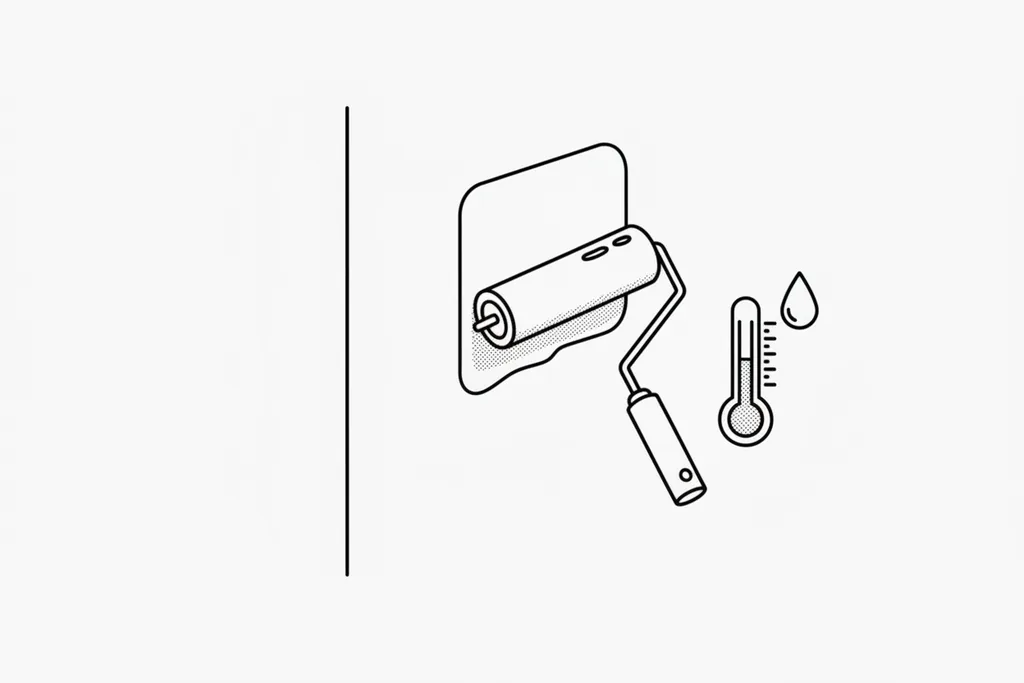
Of all the things that change how a coat of paint behaves, temperature is the one most people underestimate. The tin gives you a touch-dry time and a recoat time, but those figures assume a comfortable room at around 20°C. Paint the same wall in a cold hallway in January, or on a sun-baked exterior in July, and the numbers stop meaning very much. Get the temperature wrong and an ordinary job turns into a slow, frustrating one with a finish that never quite hardens.
Understanding why temperature matters so much makes it far easier to plan a job around the weather, the season, and the room you are working in. At Painters and Decorators Surrey we paint year-round, indoors and out, so below we have set out how heat and cold change drying times, what the ideal range actually is, and how to get a good result whatever the thermometer says.
Why temperature changes everything
Paint does not just sit and harden on its own schedule. Water-based emulsion and acrylic dry as the water evaporates and the resin particles coalesce, or knit together, into a continuous film. That coalescing step only happens properly above a certain temperature. Oil-based and alkyd paints cure differently again, through a slow chemical reaction with oxygen, and that reaction also speeds up in warmth and slows down in cold.
Both routes are temperature-driven. Warmth makes water evaporate faster and pushes chemical curing along; cold does the opposite on both counts. This is why the same tin can be touch-dry in 40 minutes in a warm lounge and still tacky after half a day in an unheated spare room. The paint has not changed — the conditions have.
The ideal temperature range for painting
Most household paints are formulated to be applied and to cure between roughly 10°C and 25°C, with somewhere around 18 to 22°C being the comfortable sweet spot. In that band the film forms evenly, levels out nicely, and dries to the times printed on the tin.
Two thresholds matter most. Below about 10°C, water-based paints struggle to coalesce and curing slows dramatically; many manufacturers set 10°C as the hard minimum for a reason. Above about 25 to 30°C — and especially in direct sun — the surface can dry far too quickly, before the coat has had a chance to flow out. The result is poor levelling, visible brush and roller marks, lap lines, and a weaker bond underneath. Aim for the middle and you avoid both failures.
Painting in cold conditions
Cold is the problem we see most often, particularly on autumn and winter jobs. When a surface sits below 10°C, water-based paint can skin over on top while staying soft beneath, or simply refuse to set for days. On exterior work the risk is worse still: paint applied late in the day can be caught by an overnight frost before it has cured, which ruins the film entirely.
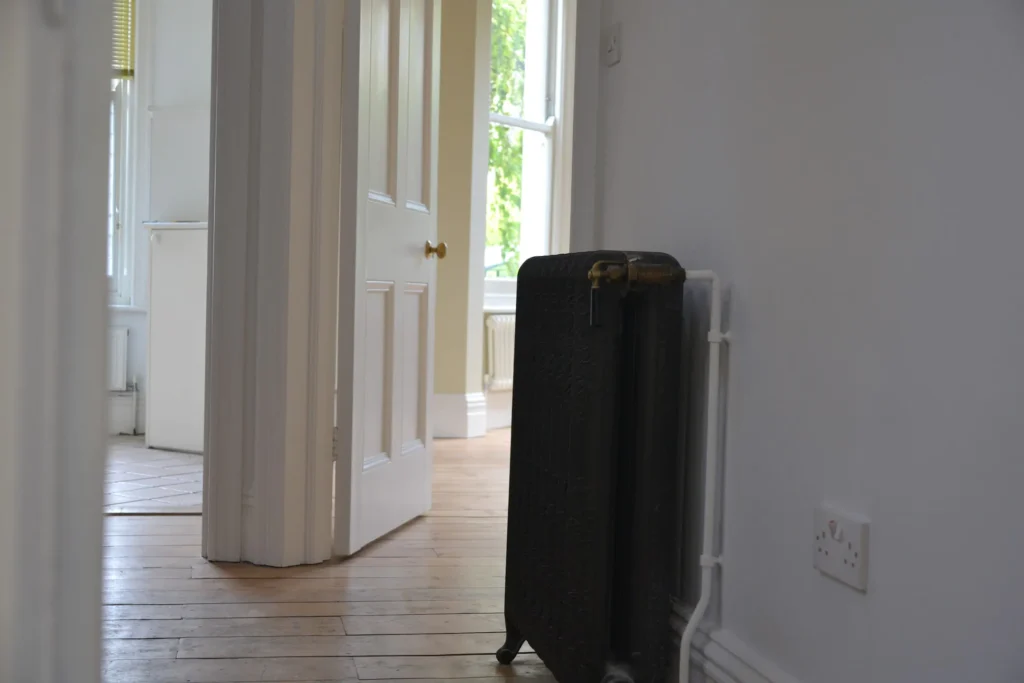
The fix is not to aim a fan heater at one patch — that flash-dries the surface and traps moisture below. Instead, bring the whole room up to a steady, moderate temperature a few hours before you start and hold it there overnight while the paint cures. A maintained 15°C beats a hot blast every time. Watch the surface temperature, not just the air: an external wall or a windowsill can be several degrees colder than the room. If a coat does stay stubbornly soft, our guide on why paint will not dry walks through the causes and fixes, and for outdoor timing see our advice on winter-ready exterior painting in Surrey.
Painting in hot weather
It is tempting to think more heat is always better, but high temperatures bring their own problems. When a surface is too hot, or sitting in direct sun, paint dries before you can lay it off properly. The wet edge disappears between strokes, leaving lap marks where new paint meets paint that has already started to set, and the film can crack or blister as the surface beneath stays hot.
For exterior work in summer, follow the shade around the building so you are never painting a wall in full sun, and avoid the hottest part of the afternoon. Keep the lid on the tin between pours so the paint itself does not thicken, and do not stretch the coat too far. Indoors, a stuffy, overheated room with no airflow can be just as awkward as a cold one. Choosing the right product for the conditions helps too, which is something we cover in our guide to the best exterior paint for Surrey's climate.
Humidity works alongside temperature
Temperature rarely acts alone. Humidity — the amount of moisture already in the air — has a big effect on how fast water-based paint can release its own water. A warm but very humid day, common after summer rain, can dry paint more slowly than a cooler dry one, because the saturated air has little room to take on more moisture.
The practical takeaway is to think about warmth and airflow together. Gentle ventilation helps moist air move away from the surface, but avoid a strong through-draught that dries the edges before the middle. If a room is persistently damp or steamy — a bathroom or utility space — that moisture will fight the paint no matter how warm it is, and a genuine damp problem needs dealing with first. Our piece on how to spot and treat damp explains what to look for.
Drying times at different temperatures
The figures below are a rough guide for a standard water-based emulsion to show how much temperature shifts things. Actual times vary by product, coat thickness and humidity, but the direction of travel is always the same.
| Conditions | Touch-dry | Safe to recoat |
|---|---|---|
| Below 10°C (cold room) | Several hours, often longer | May not cure properly — avoid |
| 10–15°C (cool) | 1–2 hours | 6+ hours |
| 18–22°C (ideal) | 30–60 minutes | 2–4 hours |
| Above 28°C / direct sun | Very fast, but risks poor finish | 2–4 hours, watch for lap marks |
Oil-based gloss and satinwood run far slower throughout — typically touch-dry in 6 to 8 hours and recoat after 16 to 24 hours in ideal conditions — and cold stretches those figures out even more. Whatever the paint, give the room time to reach a stable temperature before you judge whether a coat has failed.
Getting it right whatever the season
You cannot control the British weather, but you can control the conditions around your paint. Check the room or surface temperature before you start, not just the forecast. In winter, warm the space steadily and finish early enough that the coat cures before the temperature drops overnight. In summer, chase the shade and avoid painting in the heat of the day. In every season, keep coats thin — two thin coats cure faster and more evenly than one thick one — and pay attention to ventilation and humidity.
Good preparation underpins all of it, because even a perfectly timed coat will struggle on a dusty or unsealed surface; our walkthrough on how to prepare your walls for painting covers the groundwork. And if you would rather not work around the weather yourself, our interior painters work across Surrey and South West London, from Weybridge to the London borders, and plan every job around the conditions. Request a free quote and we will take it from there.