In this article
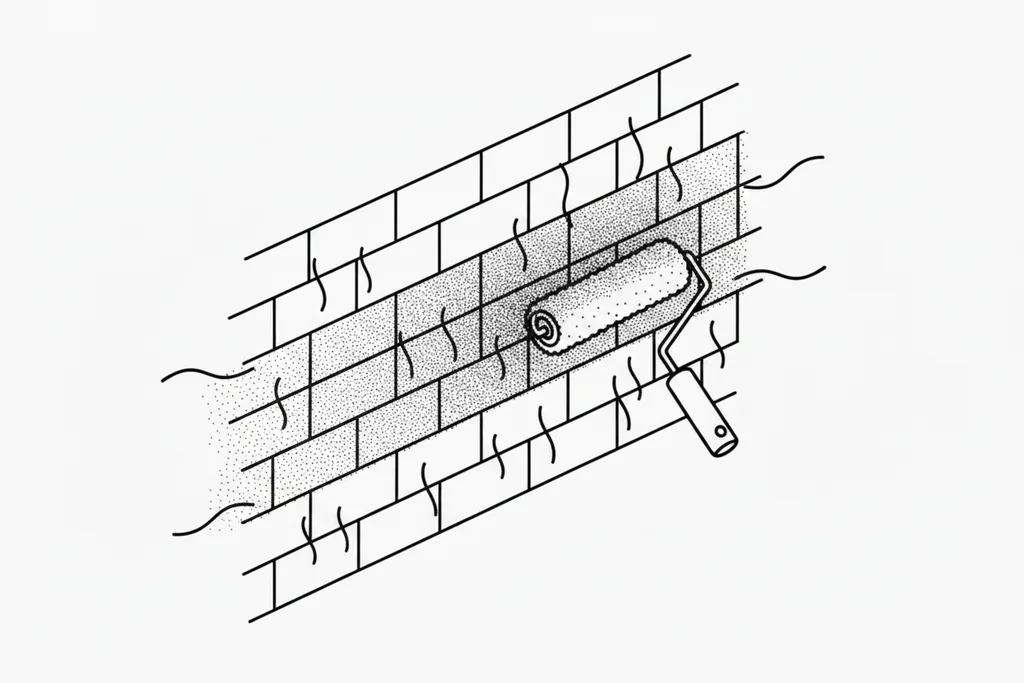
A homeowner in a draughty Edwardian terrace asks us to roll on a "thermal" or "insulating" paint instead of facing the cost and disruption of proper wall insulation. The tins promise a warmer room and double-digit savings off the gas bill, and we get asked about it most weeks.
The honest answer: these paints do something, but not enough to show up on a heating bill, and on the wrong wall they can make matters worse. Here is what thermal paint actually is, why it underperforms on a typical Surrey home, and where the same budget is far better spent.
What "thermal paint" actually is
Most thermal or insulating paints are a standard acrylic or silicate coating loaded with tiny ceramic or glass microspheres. The marketing claims usually fall into three buckets:
- it reflects radiant heat back into the room;
- it slows heat passing out through the wall;
- it works as a stand-in for cavity or solid-wall insulation.
The first claim has a grain of truth; the third does not. Products such as Thermilate and the Hy-Tech range are often pitched at owners of solid-wall Victorian and Edwardian homes, the very stock across Guildford, Woking and older parts of Surrey that loses the most heat, and exactly where these paints disappoint.
What the physics says
Insulation is measured by thermal resistance, the R-value: higher is better. A paint film is a fraction of a millimetre thick, so its R-value is tiny, on the order of hundredths of a unit, while proper cavity or solid-wall insulation sits at 2.5 to 3 and above. You would need dozens of coats to approach what a single insulation measure delivers, which is not a real-world option.
Independent testing tells a consistent story: a treated wall may feel a touch warmer, perhaps a few tenths of a degree, but across a full heating season that does not translate into measurably lower gas use, and any reflective benefit only shows on a sunlit surface, not the north-facing elevations common on Surrey terraces. In short, the paint nibbles at radiant heat while doing nothing about the two things that actually drain a period home: a thick, uninsulated wall, and air leaking out around windows, doors and floorboards.
Why it falls short on a Surrey home in particular
Surrey's older housing stock and damp, wet climate stack the odds against a thin coating:
| Factor | Why thermal paint cannot fix it |
| Solid-wall construction (pre-1920s) | Most heat escapes through 300mm+ of uninsulated brick or stone; a paint film cannot touch that. |
| High humidity and rainfall | A non-breathable coating can trap moisture in the wall, feeding damp and mould and making the wall colder still. |
| North-facing elevations | Common on terraced streets; with little solar gain, the reflective claim has nothing to work with. |
| Air leakage | Period homes lose heat through gaps at windows, doors and skirtings; paint seals none of them. |
That damp risk is the one to watch. Seal an old solid wall under an impermeable film and you trap moisture behind it, which over time spoils plaster, perishes brick and leaves the wall performing worse, not better. If you are already battling cold, dark patches, our guide on how to spot and treat damp explains why breathability matters far more than any "thermal" label on the tin.
What counts under Building Regulations
Part L of the Building Regulations judges an energy upgrade on whether it lowers the wall's U-value under a proper assessment. Thermal paint does not qualify:
- EPC and grant-funded schemes do not recognise it as insulation;
- it does not count toward minimum renovation standards;
- it is not a TrustMark or PAS 2035/2030 measure.
The fabric measures that do move an EPC are internal or external wall insulation, draught-proofing and topping loft insulation up to around 270mm. If a better energy rating is your goal, our companion piece on how painting and decorating can boost your energy rating sets out where decorating genuinely helps and where it does not.
What actually cuts the heating bill
If the budget you had earmarked for thermal paint is a few hundred pounds, here is where it does real work.
1. Draught-proofing
Sealing the gaps around windows, doors and floorboards is the cheapest, highest-return job on this list, and on a leaky period home it cuts far more heat loss than any coating. When we repaint timber windows we overhaul the beads, fit fresh seals and ease sticking sashes as standard; our wooden window painting service and our wider guide to painting wooden windows in period homes cover how that is done without harming an original frame.
2. Breathable insulating plaster
For solid-wall homes, a lime-based insulating plaster adds a modest but genuine layer of resistance while letting the wall breathe, which suits Surrey's damp climate far better than a sealed film. It is real insulation rather than a marketing line.
3. Reflective foil behind radiators
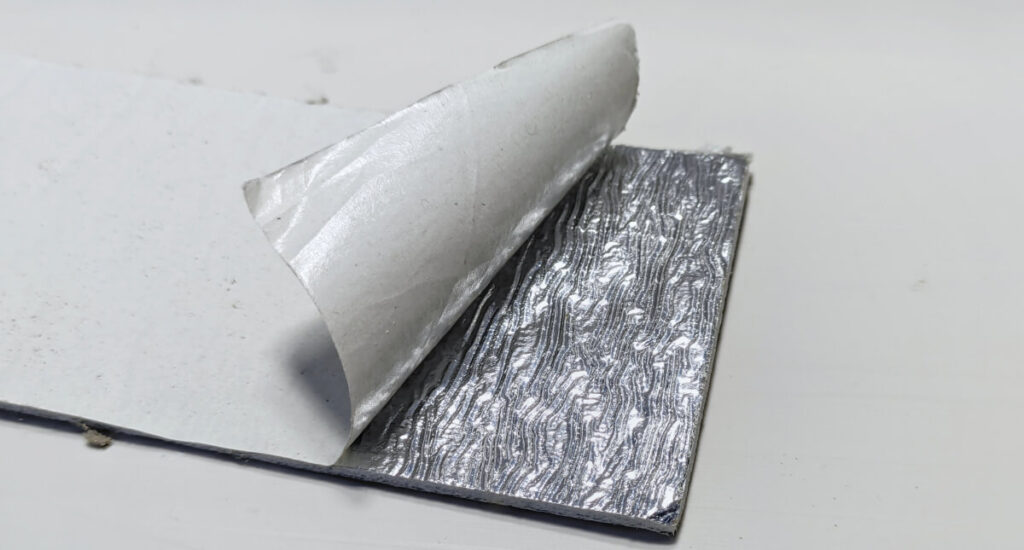
A foil-backed panel slipped behind a radiator on an external wall bounces heat back into the room instead of letting it soak into cold brickwork. It is one of the few "reflective" tricks that earns its place. While you are at it, a tidy repaint of the radiator itself keeps the whole wall looking sharp.
4. Loft insulation top-ups
Heat rises, so an under-insulated loft is often the single biggest leak in the house. If yours is below the recommended 270mm, topping it up is usually the first upgrade worth making, and it costs a fraction of insulating the walls.
Where thermal paint does earn its keep
It is not snake oil in every setting. A reflective coating can pull its weight as a finishing layer over insulation that is already in place, or as part of a proper external render system rather than as the insulation itself. It also makes more sense on metal-clad commercial and warehouse buildings, where radiation really is the main route heat takes and a sprayed coating helps, alongside a breathable, weatherproof exterior coating chosen for the Surrey climate. In all of these, expect a small contribution, not the headline savings the advertising implies.
The verdict: manage your expectations
Thermal paint can shave a little off your heating, but on a typical Surrey solid-wall home the effect is too small to notice on a bill, and the wrong product on the wrong wall risks damp. The money goes further on the basics already covered above, plus thermostatic radiator valves and heavier curtains or secondary glazing to tame single-glazed windows.
We will always tell you straight which jobs are worth doing and which are not. If you want an honest steer on warming up an older Surrey home, with breathable exterior finishes and careful interior work that helps rather than hides a problem, get in touch for a free quote and we will talk it through.