In this article
Most people wait too long. The trigger is usually a yellowing ceiling above a radiator, a scuffed hallway that never quite wipes clean, or mould creeping out from behind a wardrobe. By then the paint has stopped doing its job and the fix is bigger than a quick refresh.
Paint is not just colour. It is the breathable, washable skin on your walls, and like any surface it has a service life. Knowing roughly when each room is due takes the guesswork out of decorating and stops small problems turning into damp, staining or a poor first impression when you sell.
Why Regular Redecoration Matters in Surrey
Surrey’s mix of damp winters, high humidity and big temperature swings is hard on paint. Interior surfaces collect condensation; exterior coatings take a battering from driving rain on exposed plots around Box Hill and Hindhead.
The bigger risk is the wrong paint failing early. Standard vinyl emulsions and plastic-based masonry paints trap moisture, a real problem on the solid-walled Victorian and Edwardian stock common across the county. When water can’t escape it sits behind the film, and you get flaking, salting and the damp problems worth catching early. Builders’ finishes on new homes are usually a single thin contract coat, so they mark and wear far sooner than owners expect.
Left alone, tired paint does more than look dated:
- Trapped moisture feeds mould, particularly in bathrooms, behind furniture and on north-facing walls.
- Dirty, dull surfaces absorb light, so rooms feel darker and smaller than they are.
- Peeling exterior coatings expose timber and render to rot and frost damage.
Redecorating on a sensible cycle is part of maintaining the building, not just freshening the look.
How Long Does Paint Really Last? A Room-by-Room Guide
The usual rule of thumb is to repaint interiors every five to ten years. That range is wide because how long a coat lasts depends almost entirely on the room, how hard it works, and how well the surface was prepared in the first place. Paint applied over sound, properly prepared walls reaches the top of these ranges; a coat rushed over filler and old gloss rarely does.
High-Traffic Interiors: Hallways, Kitchens, Living Rooms
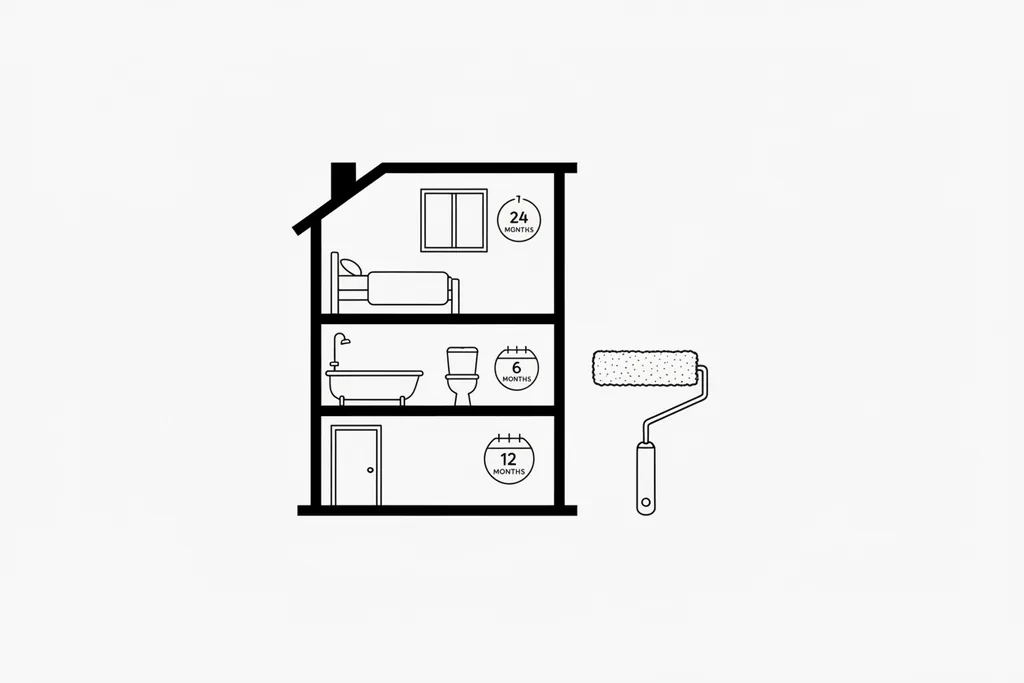
Plan on four to five years here. Hallways and stairwells take constant knocks; kitchens deal with steam, grease and splashes. Flat matt emulsion struggles in these zones because you can’t scrub it without burnishing the surface.
Specify a washable, low-sheen finish such as a soft sheen or a quality eggshell, so marks wipe off without leaving a shiny patch. In kitchens especially, the right finish for steam-prone rooms is the difference between a wall you maintain and one you keep repainting.
Low-Traffic Interiors: Bedrooms and Studies
These rooms can comfortably go six to eight years. The main enemy is sunlight: strong colours and feature walls on south-facing aspects fade noticeably, so check those before you assume the whole room is fine.
Bathrooms
Inspect bathrooms every three to five years. Constant moisture is relentless, and the first black spotting almost always appears at ceiling-to-wall joints and behind mirrors. That is your sign the coating has run out of fungicide; a bathroom-grade emulsion with an anti-mould additive buys far more time than standard trade white.
Exterior Surfaces
Masonry and render in Surrey typically last five to ten years, with timber needing attention sooner. Aspect matters more than age: north-facing elevations and anything shaded by trees can grow green algae within three or four years and want cleaning down and recoating ahead of schedule. A breathable mineral or silicate masonry paint lets walls dry out rather than blistering, which is why choosing the right exterior paint for the local climate is worth getting right first time. For new builds, don’t assume the thin contract finish will see you through the warranty period; our new-build decorating checklist flags the spots that wear first.
The Best Time of Year to Redecorate in Surrey
Timing affects how well paint dries, how long it lasts and how comfortable the job is to live through, and the interior and exterior seasons pull in opposite directions.
Interior Painting: Late Winter to Early Spring
January to April tends to bring the lowest indoor humidity of the year, so coats bond well and dry at a sensible pace. Windows stay shut, which keeps dust off wet paint. The one rule to hold onto is temperature: keep rooms above roughly 10°C, as most manufacturers specify, or curing slows and the finish suffers.
Exterior Painting: Late Spring to Early Autumn
Aim for March to May or September to October. These windows give the moderate 10–25°C temperatures, lower rainfall and longer dry spells that masonry and timber need to cure properly. Avoid full midday sun or high wind, both of which skin the surface too fast and cause patchy drying. On exposed Surrey plots, lean towards early autumn so coatings harden before the first winter storms; our guide to getting exteriors winter-ready covers how to protect work as the season turns.
Signs It’s Time for a Refresh, Even If It’s “Not Due”
The calendar is a guide, not a rule. Act sooner if you notice any of these:
- Chalking or roller marks that show the binder has worn out and the paint is shedding pigment.
- Cracking or flaking around windows, skirting and ceiling lines, the first place movement and moisture show.
- A musty smell that lingers after airing, often a sign of trapped damp or mould behind the surface.
- Marks and stains that no longer respond to gentle cleaning.
There is a practical payoff too. Clean, light-reflecting walls in restful, neutral tones photograph better and help a home feel cared for, which matters whether you’re selling or letting. Tired, marked surfaces, by contrast, are one of the first things a viewer reads as deferred maintenance.
Choosing What to Refresh It With
A refresh is also the moment to rethink the scheme rather than repaint what was there. Warm whites, soft greys and earthy, muted shades still dominate; our round-up of neutral paint trends for Surrey homes is a sensible starting point for something current that won’t date quickly. If you want more pattern or texture, the wallpaper trends worth considering work well on a single feature wall alongside a quiet emulsion elsewhere. Where it suits the property, we steer clients towards breathable, low-VOC and mineral-based paints, which sit far better on Surrey’s older solid-walled housing and smell much less while curing.
How We Help Surrey Homeowners Stay Ahead
As a Surrey and South West London decorating firm, we’d rather help you plan than turn up once the damage is done. Working across the county, from the exposed plots near Hindhead to the period terraces around Godalming, that means a walk-round to catch early wear, scheduling each job for the season that suits it, and specifying finishes room by room, from a wipeable kitchen eggshell with our interior painting team to a breathable masonry coat from our exterior decorators.
If a room or two has started to look tired, request a free quote or call 01483 694110 and we’ll talk through what genuinely needs doing and what can hold.