In this article
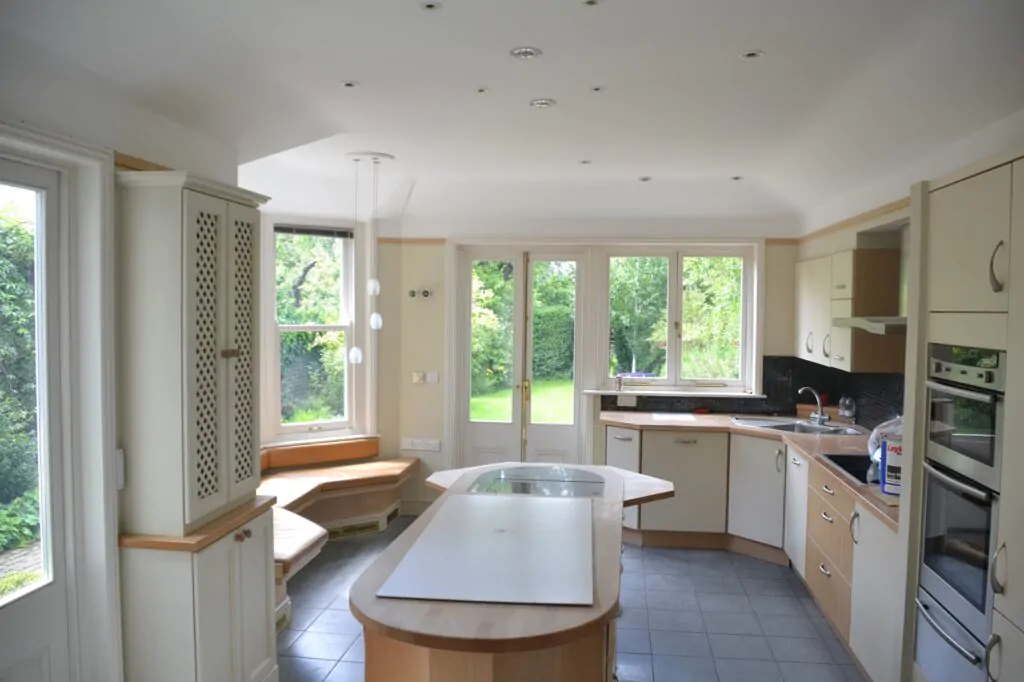
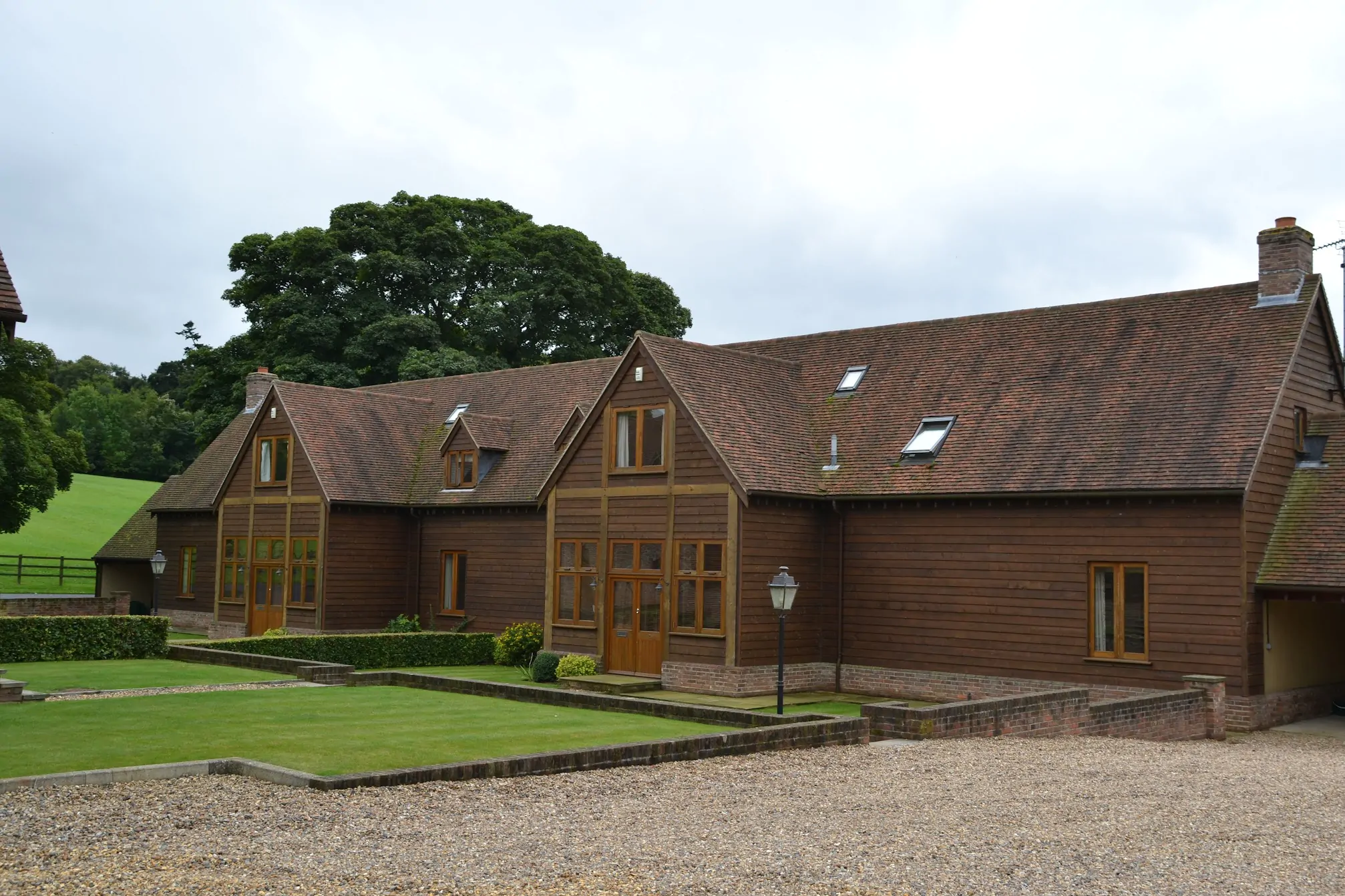
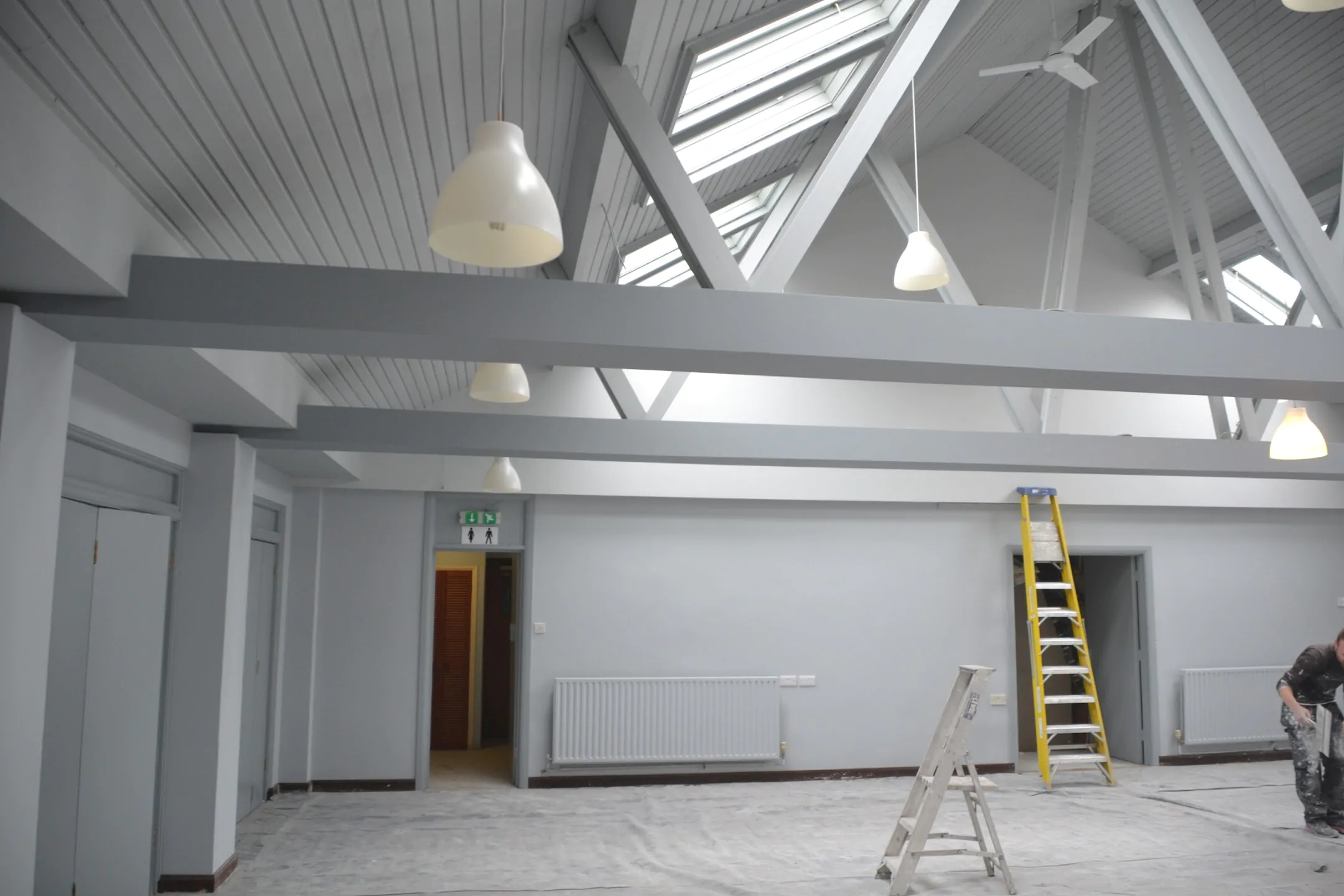
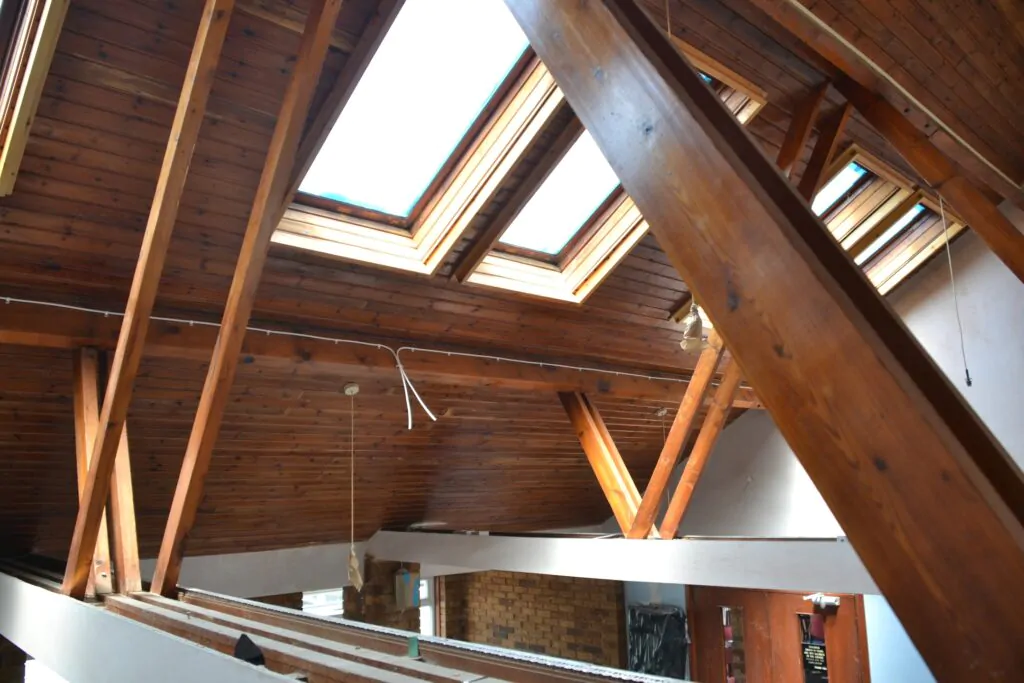
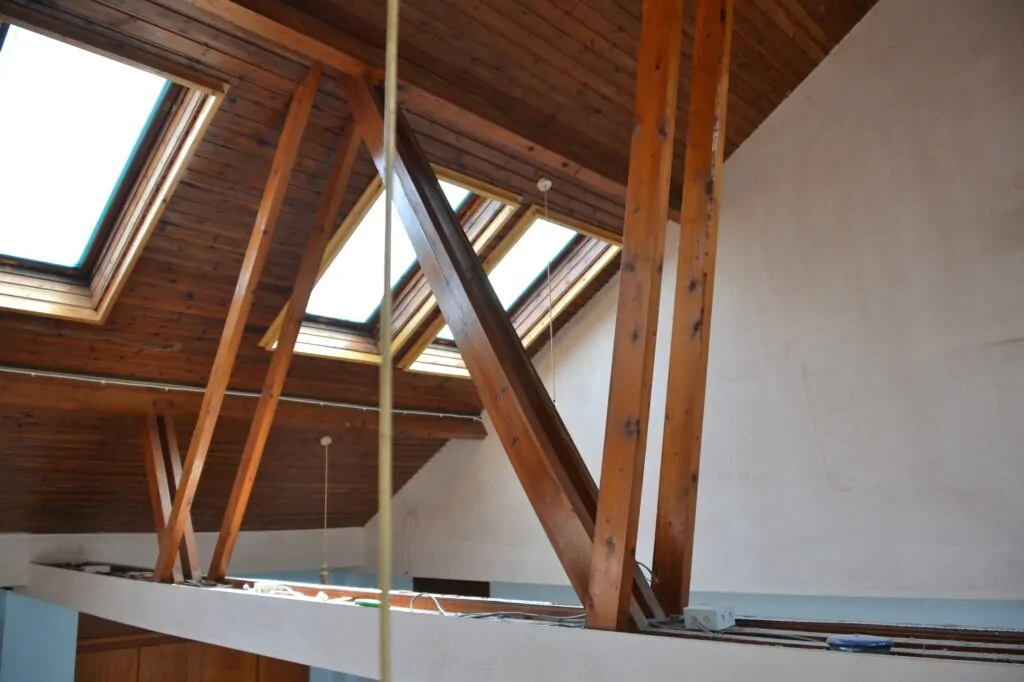
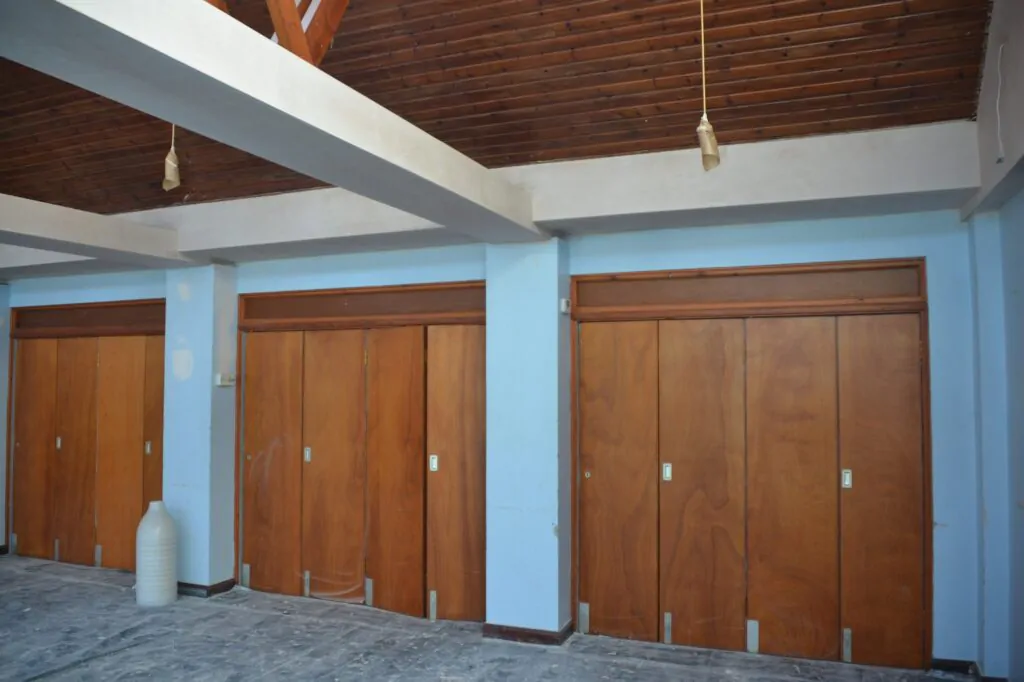
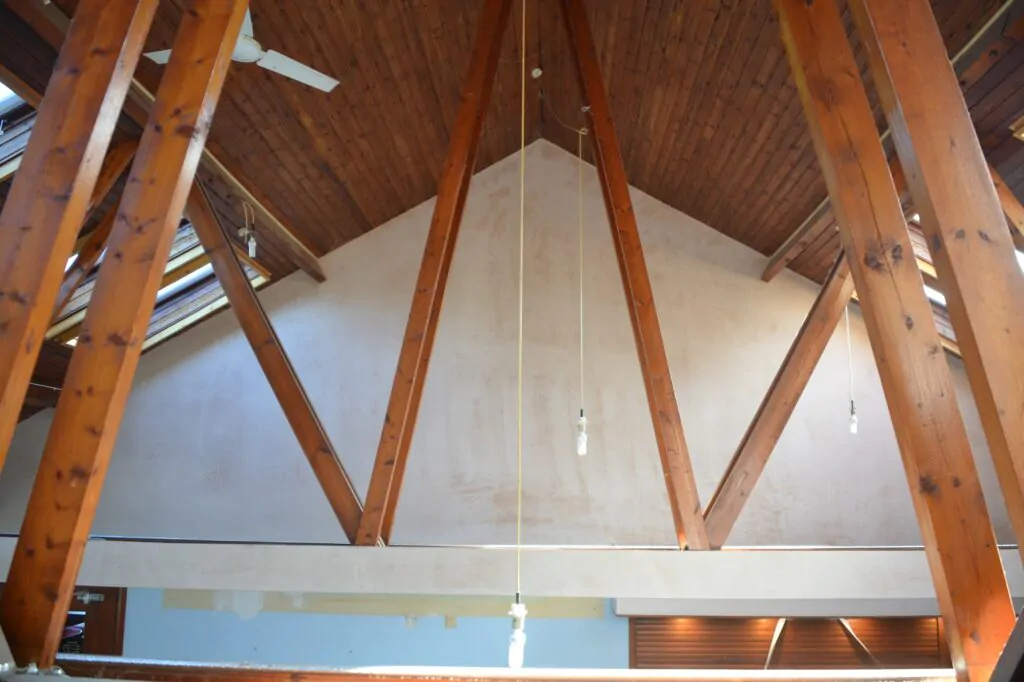
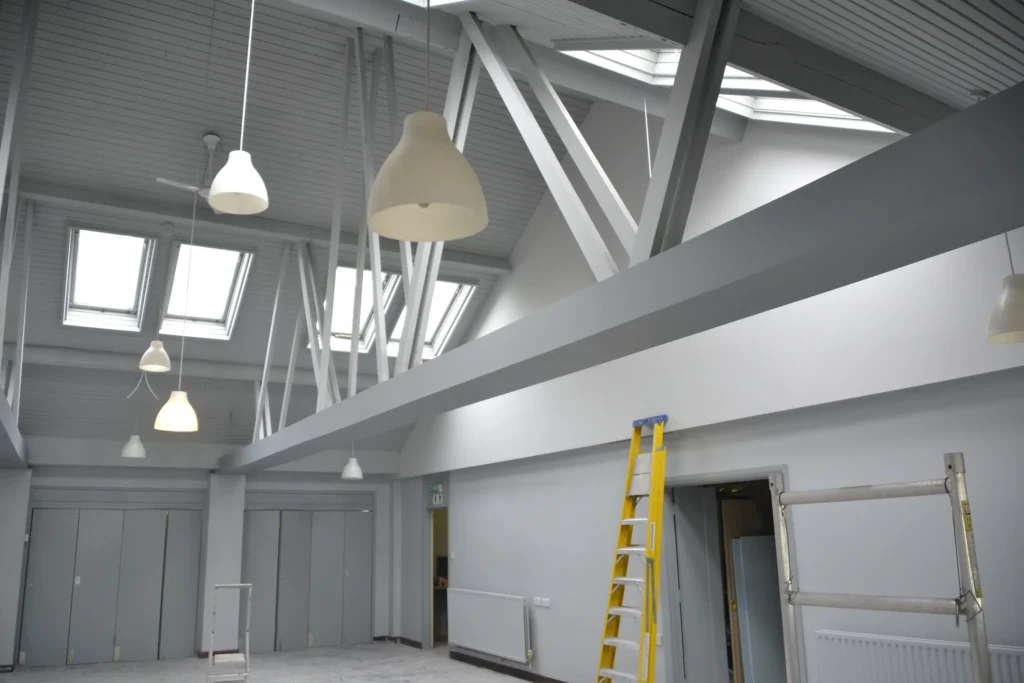
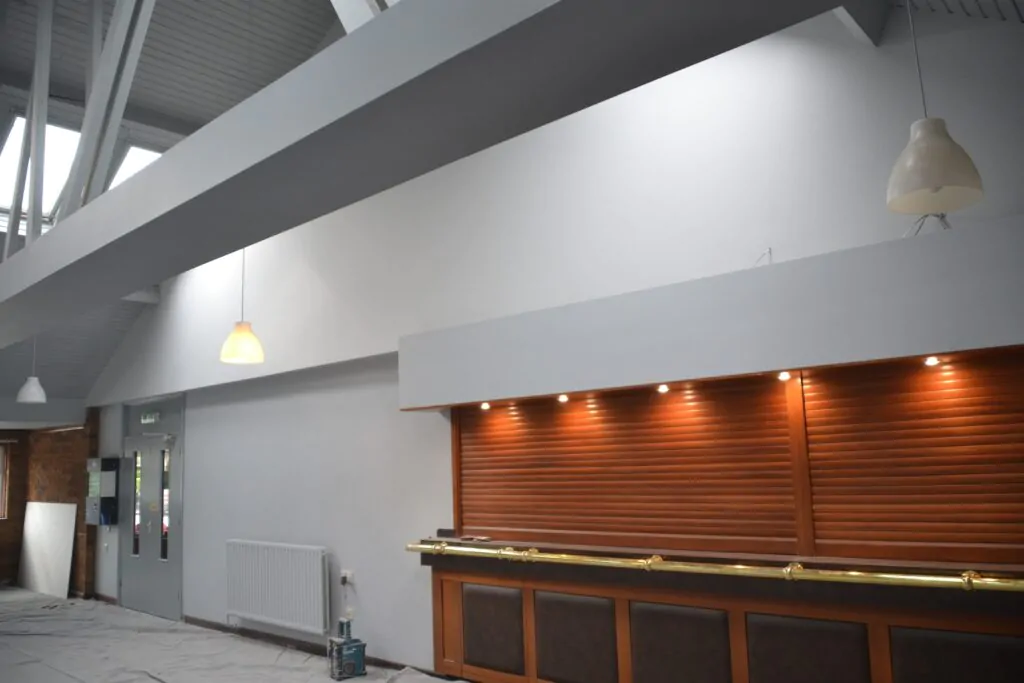
A commercial interior full of dark, varnished pine reads as dated the moment it is finished. The client on this Surrey project wanted the opposite: clean, contemporary grey across the timber wall cladding, the internal doors and the exposed roof supporting beams, without the cost and disruption of stripping it all out and starting again. Painting was the sensible route, but the surfaces had one thing in common that makes decorators wince: every one was previously stained and varnished.
The challenge: painting over stained, varnished wood
Stained timber is one of the trickier substrates to overcoat, and getting it wrong is expensive. The original finish is sealed and often slightly oily, so ordinary paint has nothing to key into. Skip the right preparation and you invite a familiar list of failures:
- Poor adhesion. Varnish and oil-based stain leave a slick, non-porous surface; paint sits on top rather than bonding, and lifts at the first knock.
- Streaking and blotchiness. Old stain rarely sits evenly, so colour and sheen vary across a board before you even start.
- Uneven coverage. Porosity differs from one length of timber to the next, pulling the wet film at different rates and leaving patchy sheen.
- Peeling and chipping. The wrong product over an unprepared surface fails within a season or two, especially on doors and beams that get handled and knocked.
- Bleed-through. If the stain and any tannins in the wood are not locked off, colour ghosts up through a pale topcoat as a yellow or brown stain.
Preparation did the heavy lifting
On a job like this, the finish is won or lost before the spray gun comes out. We cleaned every surface to cut back grease and dust, then keyed the existing varnish with a thorough abrasion so the next coat had something to grip. Gaps and splits in the cladding and around the door frames were filled and caulked, and the timber was wiped down again to leave it sound and dust-free.
The critical step on stained wood is the primer. We used an adhesion-promoting, stain-blocking primer designed to bond to slick surfaces and seal the old colour so it cannot bleed through. This is the same first principle that underpins any durable repaint, as we cover in our guide to preparing surfaces for painting. Get that base coat right and the topcoats behave; rush it and no amount of good paint will save the result.
Why we sprayed instead of brushing
Across this much profiled cladding, panelled doors and beam-work, brushing would have left visible lay-off marks and taken far longer. Spraying lays down a thin, even film that flows out flat over awkward profiles and grain, which is exactly why it is our preferred method on cladding-heavy commercial jobs. The trade-off is masking: everything not being painted, including floors, glazing, fittings and adjacent surfaces, has to be sealed off first, and ventilation managed properly while the work is in progress.
With the stain-blocking primer cured, we built the colour in controlled coats using a hard-wearing eggshell, working wet-on-wet within each pass to avoid banding and overlap marks. Eggshell gives a low-sheen, durable finish that wipes clean and copes with the knocks of a working interior, a sensible step up in toughness from standard wall emulsion. The full commercial spray painting process, from masking to final coat, is what keeps the finish uniform across hundreds of metres of timber.
The result
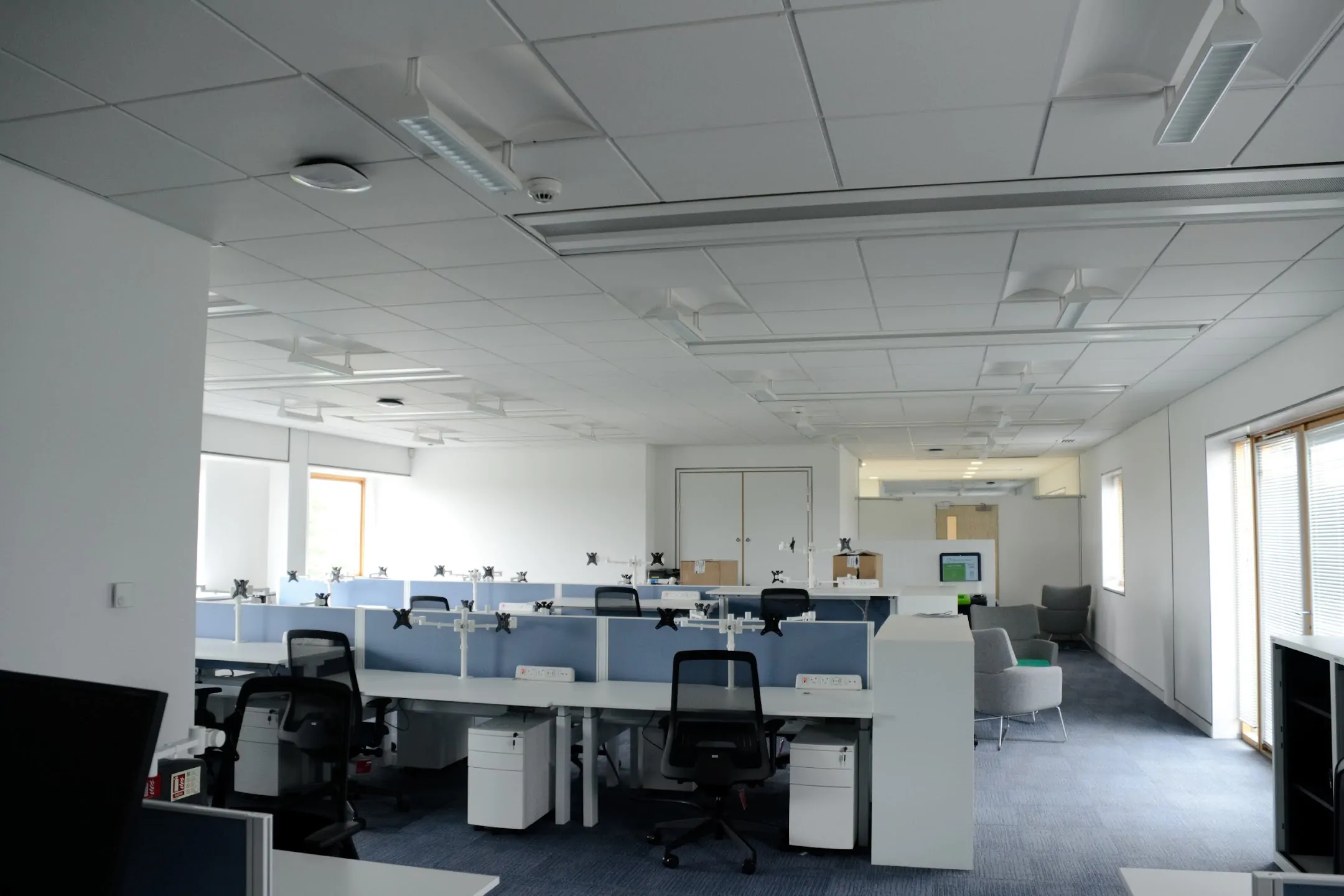
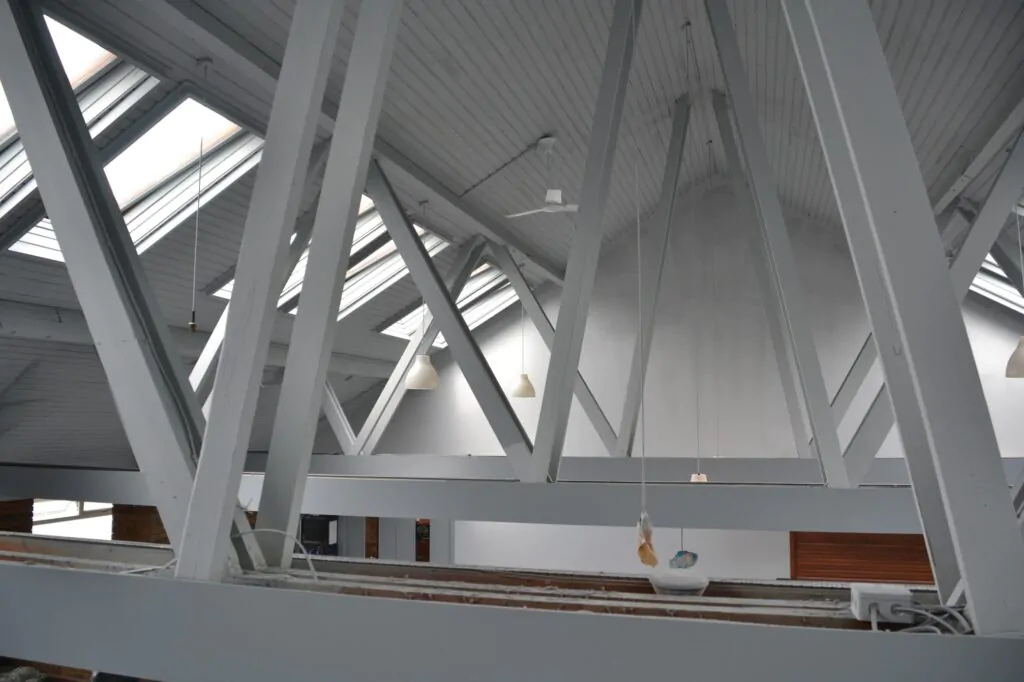
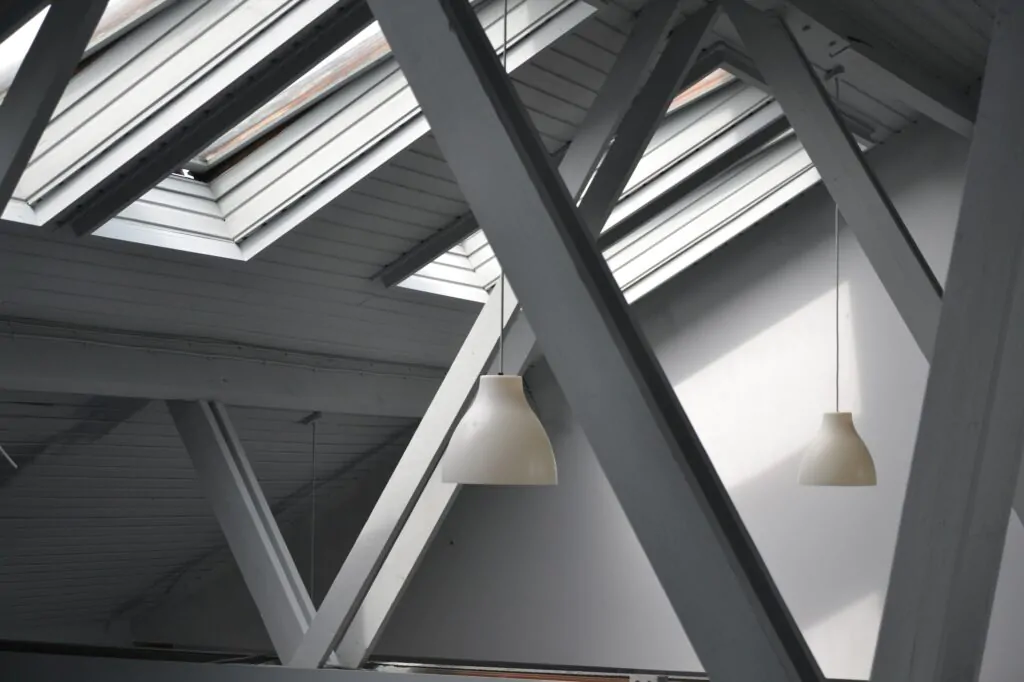
The finished interior is a clean, uniform grey that completely transforms the space. The cladding, doors and roof beams now read as one considered scheme rather than a patchwork of orange-brown timber, and there is no trace of the old stain bleeding through. Because the prep and primer were sound, the eggshell topcoat should wear well in everyday commercial use.
It is the kind of transformation a coat of colour can deliver across a whole room, and it sits alongside the wider commercial office refurbishment work we take on. If you are weighing up finishes for a workspace, our look at paint versus wallpaper in commercial spaces is a useful starting point, and it is always worth checking how your scheme fits the relevant commercial painting regulations before work begins.
Considering a similar project?
Painting over stained or varnished woodwork is achievable, but only with the right preparation and products, which is why it pays to use experienced commercial painters who do this work day in, day out. We cover Surrey and South West London for projects of every size. For a free, no-obligation quote, get in touch with our team or call 01483 694110.